




Choosing guide for Personalised Mugs
Versatile and used every day in a wide range of settings, personalised mugs are among the promotional products most appreciated by both businesses and consumers. They are available in many materials, models and capacities, and this last detail is one of the main selection criteria because it affects both the size and the intended use of the mug. Customisation, on the other hand, is what most influences the uniqueness of the product: by choosing the printing technique best suited to your logo, you can create recognisable personalised mugs that are consistent with your company’s goals.
How to choose between the different materials
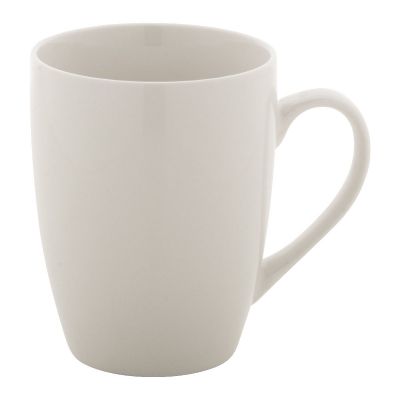
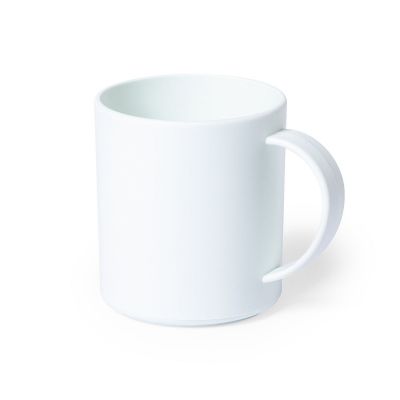
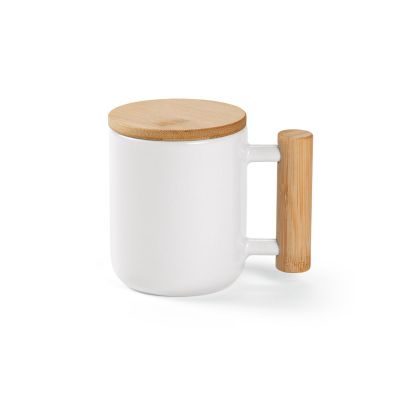
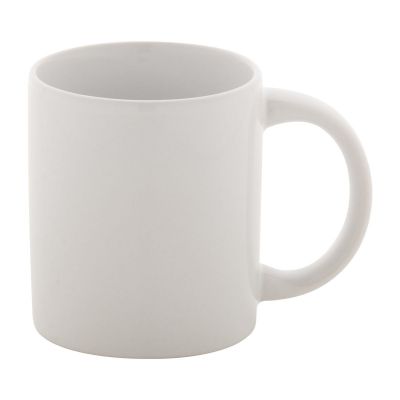
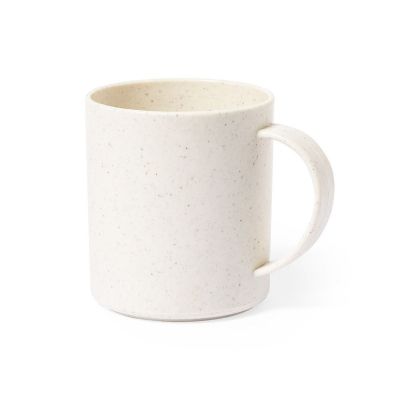
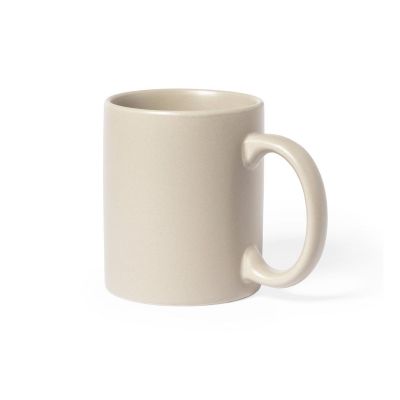
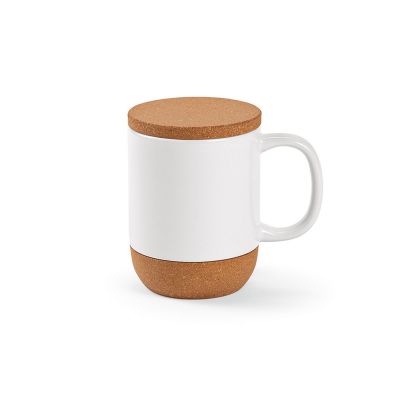
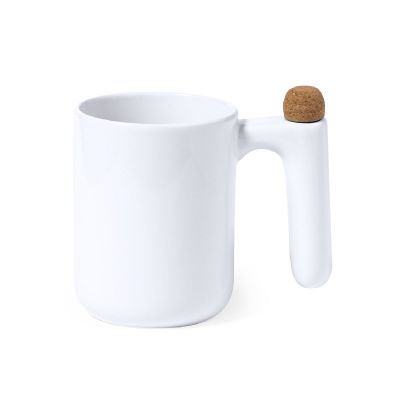
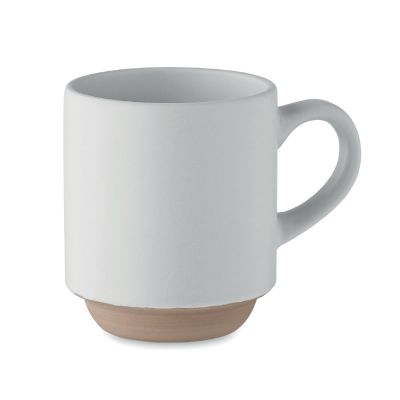
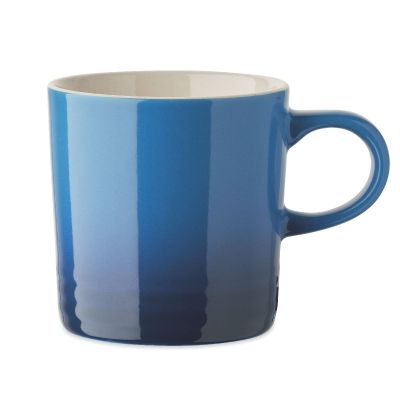
The most common material for personalised mugs is ceramic: ideal for everyday use and well suited to retaining the heat of the drink inside. Finishes vary and generally include glossy, matt and natural options. Two similar alternatives with their own specific characteristics are stoneware and porcelain. Stoneware is a durable, compact ceramic material that is highly resistant to knocks and scratches, while porcelain is finer and has a very elegant appearance. If, instead, you need a lightweight, practical product that is also resistant to knocks, plastic personalised mugs are probably the most suitable choice. The most common plastic compounds are PP (polypropylene), SAN (styrene acrylonitrile), ABS (acrylonitrile butadiene styrene) and PLA (polylactic acid). However, an important aspect to consider is that many models are made from a combination of materials. This means that, although the main body may be ceramic, porcelain or plastic, details and components can be made from different materials. Lids, handles, bases and coasters can also be available in cork, bamboo, wood, stainless steel and silicone.
Capacity and other details
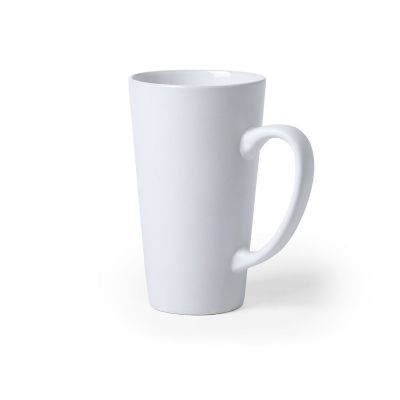
Capacity is a key feature of personalised mugs because it determines how much liquid they can hold and, as a result, their size and possible uses. The different capacities available make it possible to divide them into formats ranging from the smallest to the largest. The small format includes all products with a maximum capacity of under 300 ml, making these mugs extremely compact and suitable for coffee and smaller hot drinks. Between 300 and 400 ml is the medium format, which is also the most common for this type of product. It is suitable for all kinds of hot and cold drinks. Over 400 ml are the large and extra-large formats, although capacities generally do not exceed half a litre. Other details are also important in personalised mugs, and almost all of them are designed to make the product more practical. A traditional handle is present in most cases, while accessories such as lids, straws, spoons and non-slip bases are less common but equally useful.
Available models and colours
Choosing the right model is far from simple, but having a clear overview of the available alternatives makes it easier to understand which option best suits your needs.
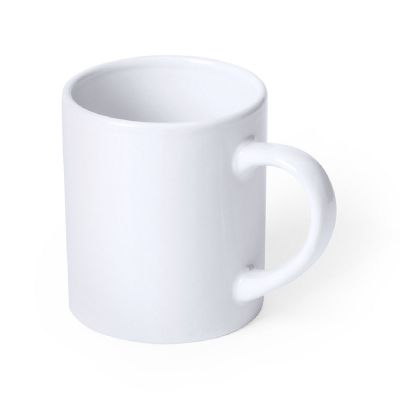
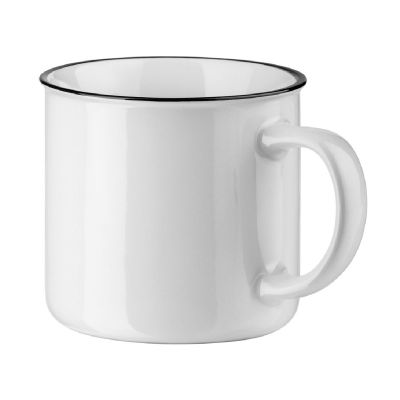
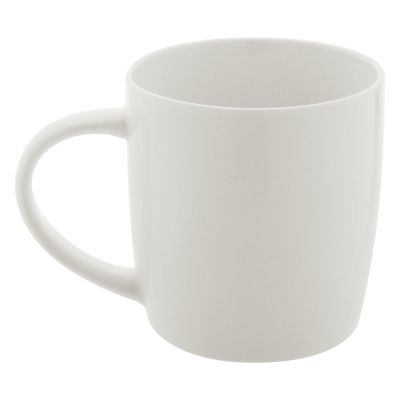
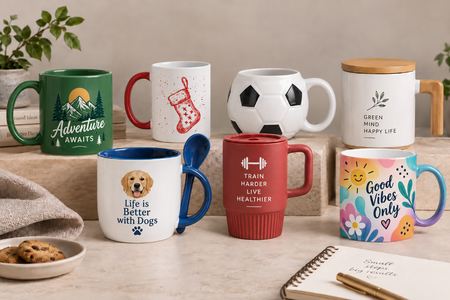
- Classic mugs: the dominant and best-known type. They have a handle for an easier grip and are available in various colours and materials. Their look can be modern or more vintage and retro.
- Tumbler-style mugs: models without the classic side handle. They have a less traditional appearance and allow the entire body to be held.
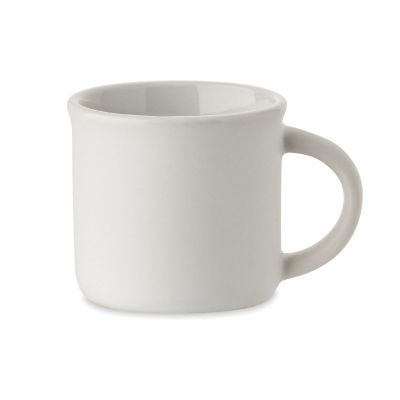
- Espresso mugs: they have a much smaller shape and generally a capacity below 250 ml.
- Writable mugs: very modern models with a chalkboard-effect surface that allows the user to write or draw directly on them.
- Mugs with accessories: products that, in addition to the mug itself, include accessories designed to make them even more practical and versatile. This category includes lids, spoons, straws and non-slip bases.
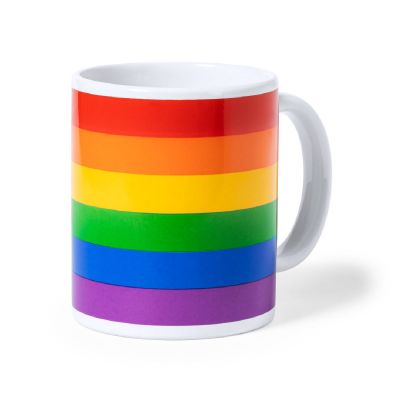
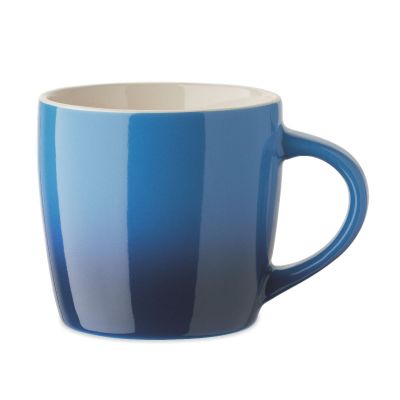
There is also a wide variety of colours available, ranging from more classic shades such as white, black, blue and red to more modern and distinctive options such as fuchsia, fluorescent, turquoise and rainbow.
Customisation
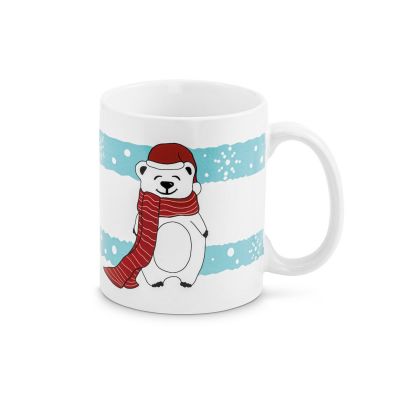
Mugs are among the most popular promotional products because they not only give a brand excellent visibility, but also offer numerous customisation options, adapting to almost any type of logo and artwork. The printing technique that best suits your needs depends on several factors, including the material, the available print area and your budget. If you are looking for an affordable, durable and versatile print, you could choose screen printing or pad printing. Bear in mind, however, that both can use a maximum of four solid colours. For personalised ceramic mugs, two highly specific techniques may be suitable when available. Ceramic printing provides a permanent, high-quality mark that is compatible with microwave and dishwasher use; however, it can use no more than ten solid colours. The alternative is transfer printing on white ceramic, which can reproduce very complex, full-colour graphics and also provides a print that is resistant to microwave and dishwasher use. Engraving is also very popular. It produces an elegant, durable and precise result. The engraved surface is slightly rough to the touch, creating both an attractive raised effect and a visual sense of depth. This technique cannot, however, reproduce colours or gradients.

Gift ideas and usage suggestions
Breakfast is considered by many to be one of the most important meals of the day, and it is precisely at this time that personalised mugs are used most often. It is no coincidence that hotels and cafés always have them available. By personalising them with a logo or motivational message, customers immediately notice the attention to detail and feel appreciated and valued. Their versatility and everyday use also make them ideal for large-scale distribution at trade fairs and events of all kinds. Becoming part of people’s everyday lives is one of the main goals of major brands, and personalised mugs are one of the most effective tools for achieving it. Companies can also use them as gifts inside welcome boxes and Christmas boxes for customers, employees and business partners. Combined with Personalised Water bottles & Sport bottles, Personalised Placemats and Personalised Lunch boxes, they create an ideal kit for both breakfast and lunch breaks at the office. Museums, tourist attractions, schools and universities can also use personalised mugs as souvenirs or institutional merchandise. Dedicated logos and graphics can turn a simple everyday object into a tool that strengthens a sense of belonging and keeps memories alive.
If you need further information or a practical checklist to help you choose your personalised mugs, download this document.
Personalised Mugs - FREQUENT QUESTIONS
The intended use and desired effect make the difference. Ceramic is the most common and versatile option, available in a very wide range of shapes, capacities and finishes; it is suitable for corporate merchandise, offices and events. Porcelain, on the other hand, has a finer, smoother and more elegant appearance. It is particularly suitable for hospitality and premium corporate gifts.
It depends on how you intend to use it. If you are looking for a versatile model suitable for both home and office use, the medium format, between 300 and 350 ml, is the most balanced choice. Capacities below 300 ml are suitable if you want a smaller, more compact product, while over 400 ml you will find larger, high-capacity mugs generally used for generous breakfasts and drinks such as tea and infusions.
A classic mug with a handle offers a comfortable and familiar grip, while handleless models are similar to tumblers, have a more minimalist design and work well in informal settings. Both types are suitable for use at home and during breaks at work.
It is useful when you want additional functions. Lids, straws, spoons and non-slip bases can make mugs more stable or more practical to carry and use. Choosing this option can also give the product a higher perceived value than a classic mug.
The outer body is the area most frequently available for personalisation, although much depends on the model and the selected technique. Depending on the product, the handle, base, lid or other details may also be personalised. The actual available areas and their dimensions are shown on each individual product page.
The choice depends on the material, your logo and your budget. Pad printing, especially for large orders, is one of the most affordable techniques and allows you to use up to four solid colours. Engraving is more elegant and creates an attractive raised effect, but it cannot reproduce colours.
For large-scale distribution, it is best to prioritise models that are simple, versatile and easy to personalise. Classic mugs with a capacity of around 300-350 ml are perhaps the most universally suitable option, but if you want to emphasise lightness and resistance you can also choose plastic models. If your main objective is to distribute the promotional product on a large scale, avoid accessories that are not strictly necessary.
Classic ceramic mugs or porcelain mugs are the most suitable for hospitality businesses. Choose the capacity according to the service: small formats for espresso and coffee, medium formats for cappuccino and breakfast, and large formats if you plan to serve particularly generous drinks. Consider adding extra accessories if they can improve the service you offer.
Yes, this option is often available and is very useful for evaluating the product in person, especially if you are planning a large order. When available, simply click the “BUY SAMPLE” button on the relevant product page and, after choosing the colour and any personalisation, complete the purchase.
Yes, especially when they are made from ceramic, porcelain and recycled plastics or include details in cork and bamboo. To identify the more eco-friendly personalised mugs, look for the green leaf symbols on the individual product page. Green products display one, two or three leaves according to their sustainability rating.