



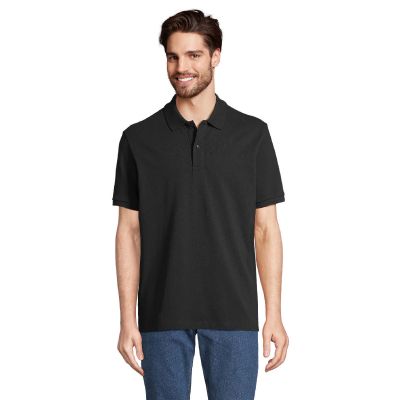
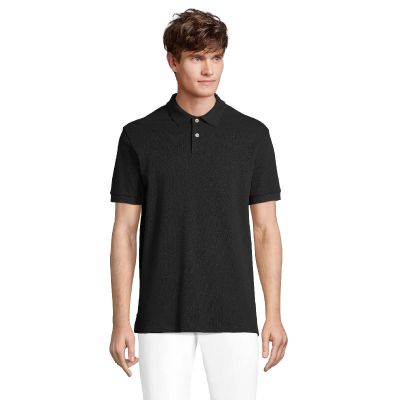
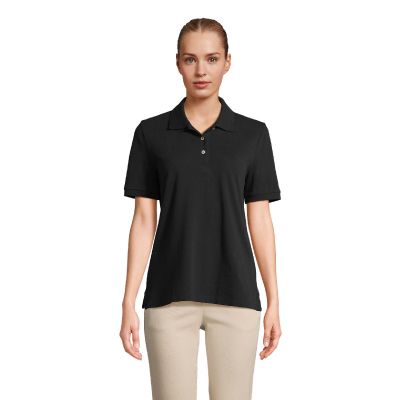
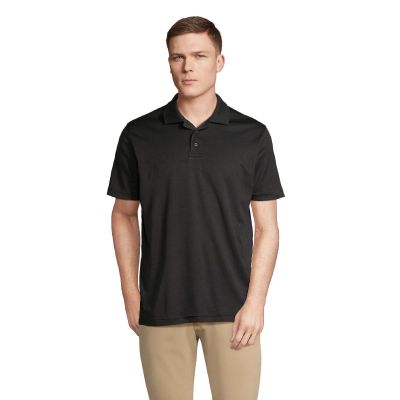
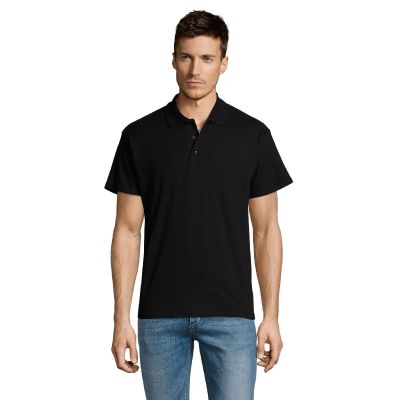
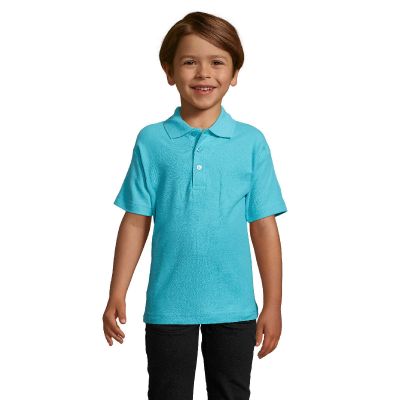
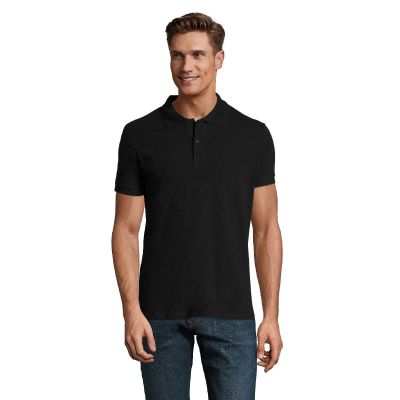
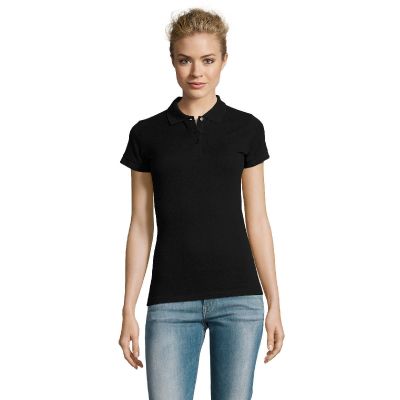
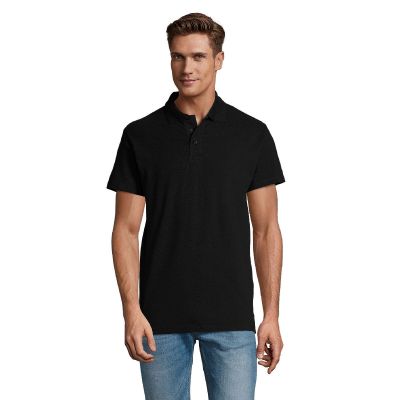
Choosing guide for Personalised Polo shirts
Comfortable, versatile and professional, Personalised Polo shirts combine elegance and practicality, making them suitable for both work settings and everyday activities. The range of sizes helps cover different needs, adapting to people of different ages and body shapes. Fit and materials define comfort and wearability, while print methods make each garment recognisable and help increase brand visibility.
Available sizes
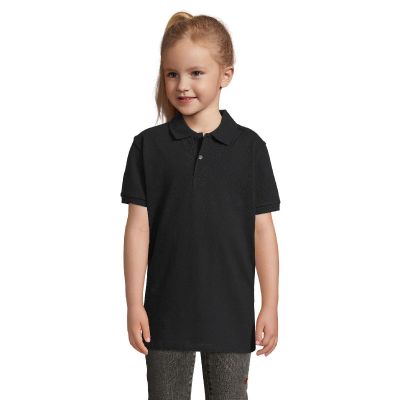
The first important distinction for Personalised Polo shirts is that sizes differ between adults and children. For men and women, the reference system is alphabetical: men’s models can go from XS up to 3XL, while women’s models usually reach XXL. The most common core range is S-XXL, available in almost all models. Children’s sizes also use this system, but the numerical conversion is often more practical because it helps choose the right size by age. The range goes from about 2 to 12 years, often divided into bands such as 5/6 and 7/8. An even more precise alternative is the height indication in centimetres, with a minimum of around 95 cm and a maximum just over 150 cm.
Fabrics and compositions
Among the available materials, cotton is the most widely used for Personalised Polo shirts: it is often worked as piqué to provide comfort and breathability and is available in several versions. Organic and recycled options keep the typical qualities of traditional cotton while adding a greater focus on materials. Combed cotton and ring spun versions stand out for their softness, smooth surface and premium appearance. Among synthetic fibres, the most common is polyester, standard or recycled. It is mainly used for technical or sports polo shirts and offers lightness, stability and quick drying. Cotton and polyester can also be blended to combine the natural feel of cotton with the resistance of polyester. Occasional blends with elastane and viscose add elasticity or breathability.
Fit and details
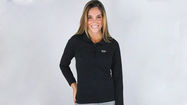
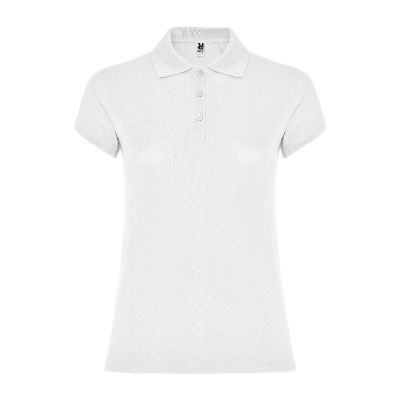
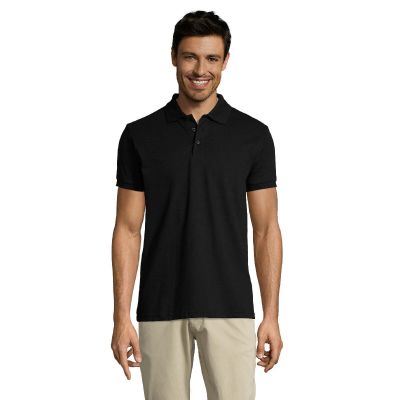
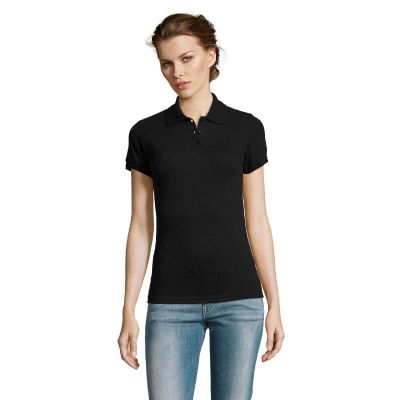
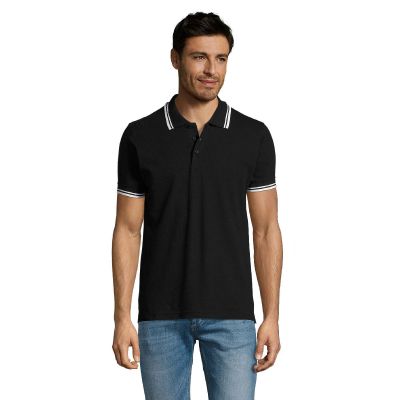
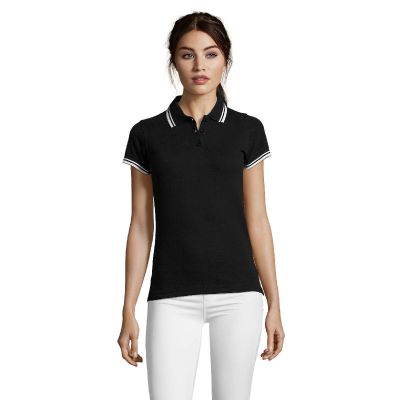
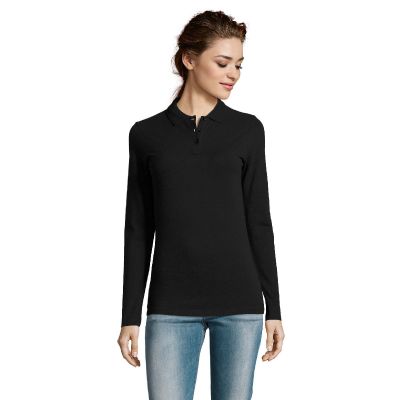
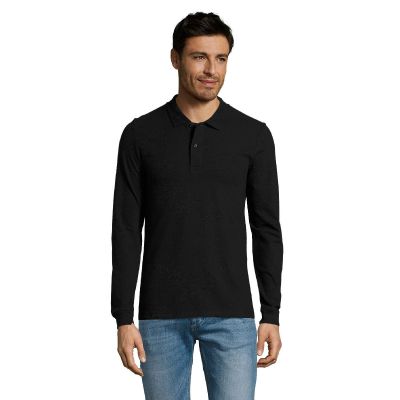
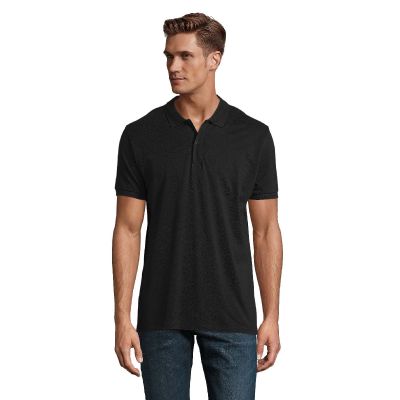
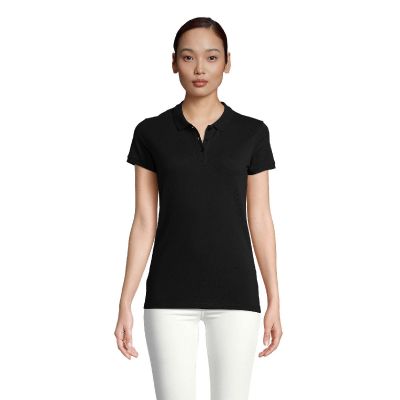
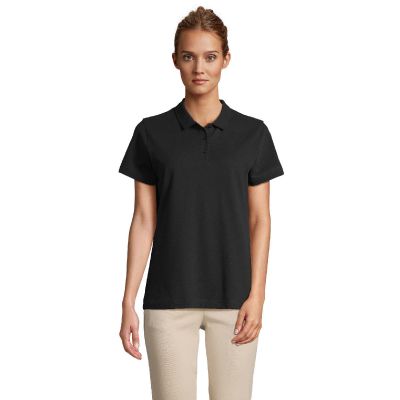
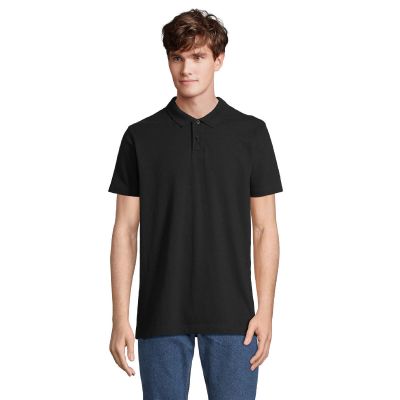
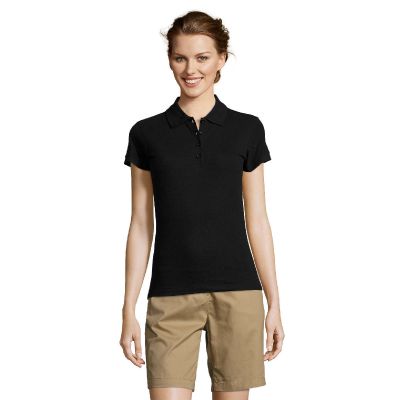
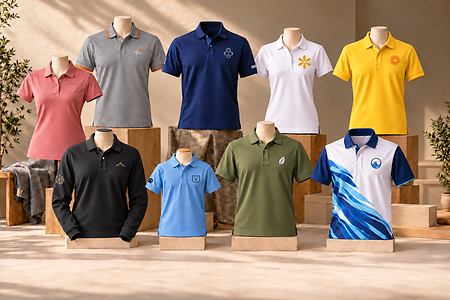
Fit is one of the main aspects of Personalised Polo shirts because it directly affects how close-fitting and comfortable the garment is. The most versatile option is regular or standard fit, comfortable and suitable for many occasions. Slim fit is more common in women’s models, but it also appears in some men’s lines; it follows the body more closely and gives a more modern, neat look. For greater freedom of movement, comfortable or large fit is useful for everyday wear and less formal uniforms. Other relevant details include the construction elements of the polo shirt. Sleeves can be short or, in some cases, long; a removable label can improve comfort and allow rebranding, while side slits, when present, improve movement and let the garment fall more naturally on the hips. Buttons define the classic polo look and usually number two, three or four; the neck can be reinforced with tapes or covered seams to reduce rubbing. A chest pocket may be optional or fixed, while collar and cuffs help keep the garment’s shape and structure.
The most suitable print methods
Personalisation is what most clearly defines and differentiates your polo shirts. The available print methods vary from product to product and depend on material, artwork and available print area. Screen printing is available on most items and offers a resistant result with a pleasant feel. It is also one of the most economical techniques, but it cannot use more than four solid colours and is not ideal for very thin or detailed logos. For colourful graphics with many details, you may choose one of the digital methods when available. DTF printing on fabric is well suited to this type of product because it allows full-colour personalisation and resists washing and wear; however, it can be damaged by ironing. Digital transfer also offers a full-colour result and can use large print areas when the item allows it, but it works best on flat, regular surfaces. Transfer printing is durable, high quality and suitable for detailed logos, although it uses a maximum of eight solid colours and should not be ironed. A more classic alternative is embroidery, occasionally also available in 3D and full-colour versions. Its application depends on fabric strength, but it gives an elegant and precise result without extra inks.
Gift ideas and use suggestions
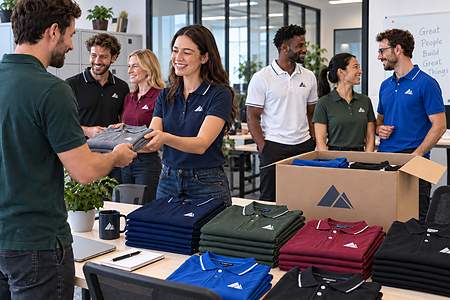
Personalised Polo shirts provide both comfort and elegance, which is why they are so appreciated as company uniforms. They create a balanced alternative between Printed T shirts and Personalised Shirts, keeping the dress code neat without making it too formal. This type of clothing is also suitable for people who work in direct contact with the public. Shops, showrooms, restaurants and bars can provide Personalised Polo shirts to employees so they look coordinated and are immediately recognisable. Quick identification is useful at trade fairs, congresses and events as well. Stand staff and hostesses can wear them and also give them to visitors together with Printed Sweatshirts and Personalised Caps; this way customers remember the experience and can promote the brand every time they wear the garment. Technical and sports polo shirts are also a practical option for professionals in the sport and fitness world, from trainers to physiotherapists and managers.
If you need a further practical checklist to help choose your Personalised Polo shirts, download this document.
Personalised Polo shirts - FREQUENT QUESTIONS
Yes, several unisex models are available and they are designed to dress mixed groups, company staff, associations and event or congress participants in a uniform way. The range includes classic unisex polo shirts, sports models and long-sleeve options. Before ordering, also consider fit, sizes and colour.
Yes, you can. When ordering, if the model has several colours available, you can select the ones you want and, for each of them, the relevant sizes. This option depends on the availability in the catalogue at that time and allows mixed supplies for employees, staff and company events.
It depends on how the polo shirts will be used. Lighter models, indicatively between 105 and 170 g/m², are suitable for warm climates, summer events and dynamic activities; between 180 and 200 g/m² there is a good balance of comfort, structure and versatility; above 200 g/m² the garment is generally more substantial and structured. Material and fabric construction also affect the result: a technical polyester polo shirt and a cotton piqué polo shirt with the same weight can behave very differently.
It depends on the season and the use context. Short sleeves are the most versatile choice for fairs, events, shops and restaurants; they work well indoors and outdoors, especially in summer. Long sleeves are more suitable for mid-season periods, cooler environments or when slightly more formal and covering company clothing is required.
The best solution is to choose a model with a wide range of available sizes and focus the supply on the most common sizes. For smaller and larger sizes, it is usually enough to keep good availability. For an even more accurate choice, collect participant sizes in advance whenever possible. Also consider unisex models, colours and fit. Economical prints such as screen printing, if consistent with your logo and expectations, are a good idea for large orders.
It depends on the type of work and the use context. For staff, company uniforms and people in contact with the public, a regular fit is usually the simplest choice because it adapts to different body shapes and makes size management easier. Consider slim fits if you want a neat, contemporary look for employee clothing. For operational, sports or constantly moving staff, comfortable fits and technical or stretch fabrics are useful.
The available positions depend on the model and the chosen personalisation technique. The most common areas are the left chest, right chest, front, upper back and sleeve. The left chest is particularly suitable for a discreet and professional company logo; front and back allow more visible graphics, while the sleeve is useful for a second brand, a sponsor or an additional personalisation.
It depends on your logo and the result you want. Embroidery is suitable if your logo is not too complex and if you are looking for an elegant, tactile and professional result. Digital techniques such as transfer printing, DTF printing and digital transfer are better for graphics rich in details, many colours, gradients and complex images. Material, logo size and print position also affect the choice: not all techniques are available on every model and in every area.
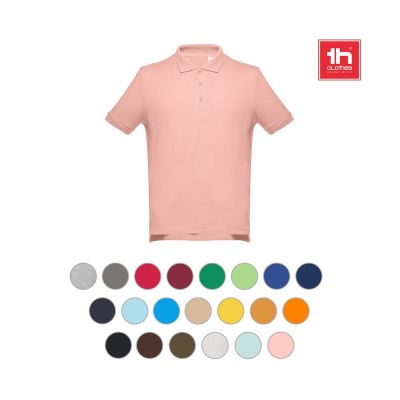
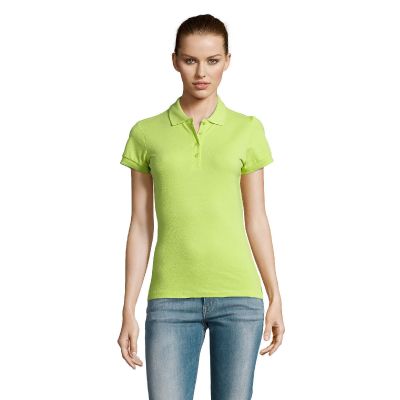
Your brand characteristics and the intended use make the difference. Neutral and dark tones are more versatile and ideal for company uniforms and daily use, while brighter colours can help staff and promoters be recognised quickly during fairs or events. If the logo contains many colours, a neutral polo shirt can help it stand out; if the brand is monochrome, the fabric colour can become part of the visual identity.
Yes, this option is available for most models. Just go to the desired product page, click BUY SAMPLE and complete the purchase. A trial supply is useful to check material, fit, sizes and colours in person, especially if you are planning a large order.