




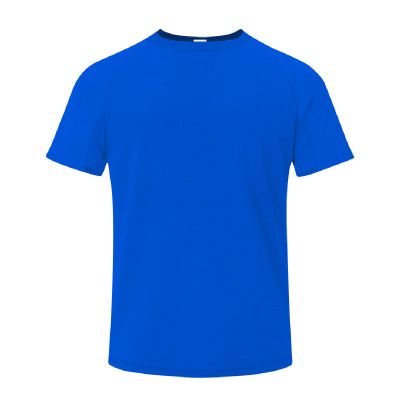
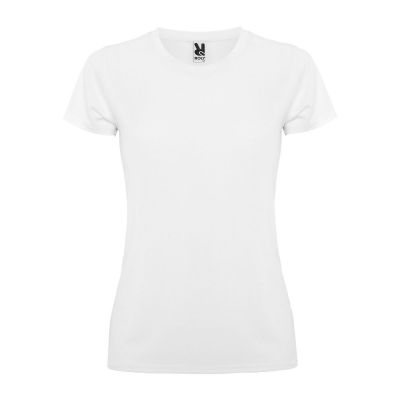
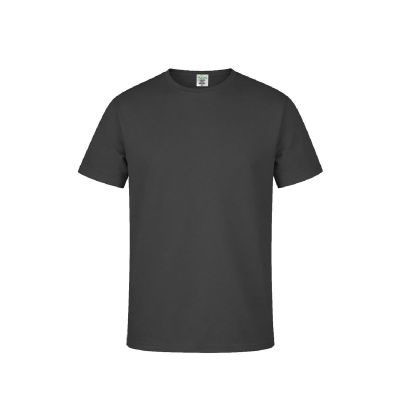
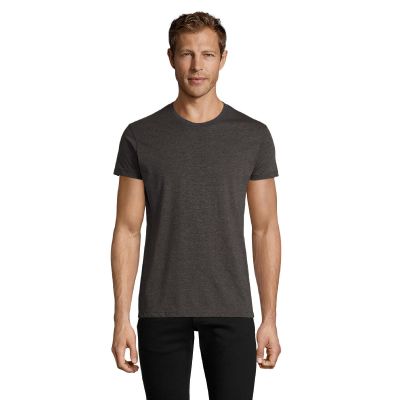

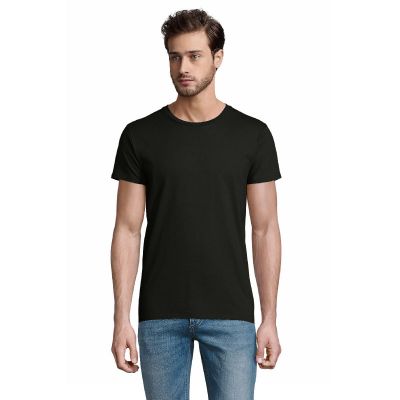
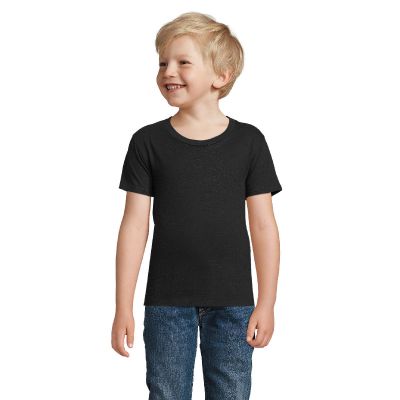
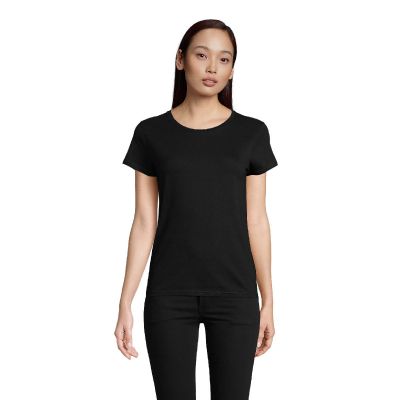
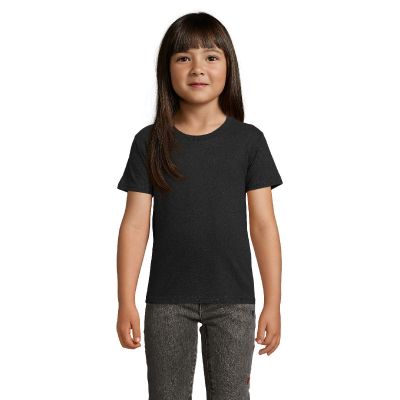
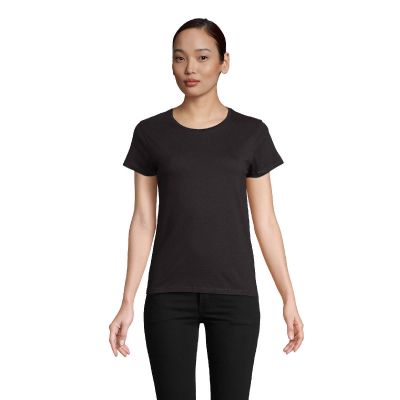
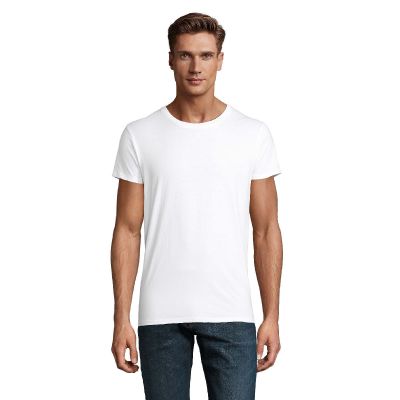
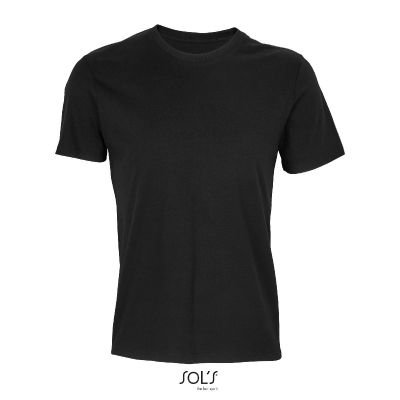
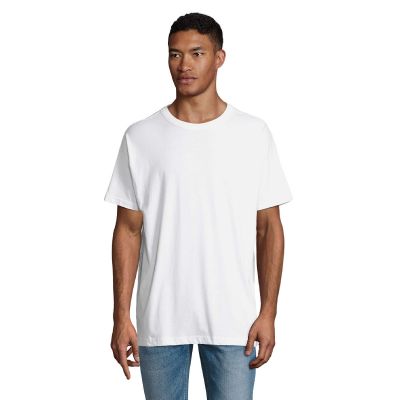
Choosing guide for Printed T shirts
Versatile and comfortable, printed T shirts are among the promotional products most widely used and recognised by the public. The different fits and broad range of sizes make them suitable for almost anyone, regardless of age and gender. The materials they are made from directly affect comfort and the message we want to communicate. Among all the available elements, however, colours and customisation contribute most to making your printed T shirts stand out from the rest. There are many print methods to choose from and, by selecting the one best suited to the product and your needs, you can create unique garments that are easy to recognise.
Sizes and colours
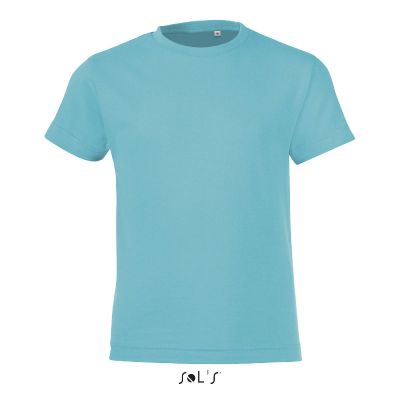
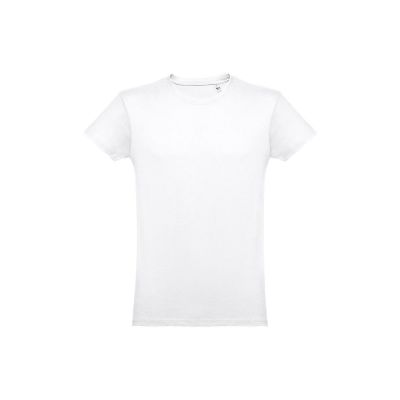
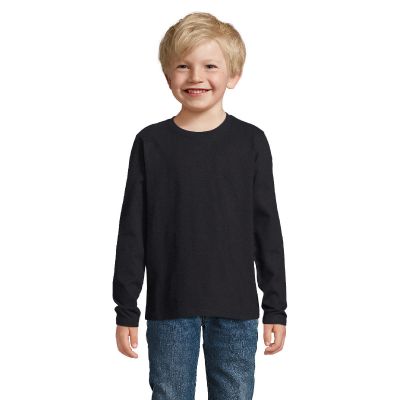
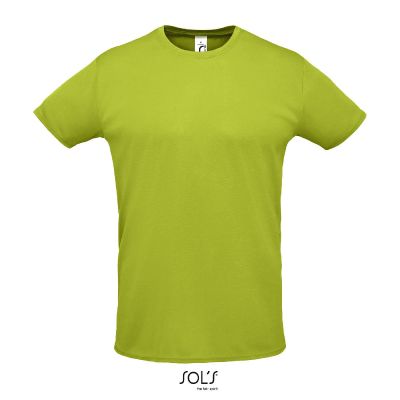
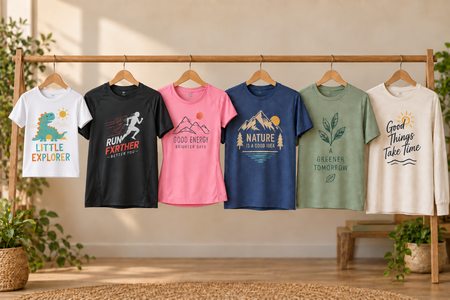
Choosing the right sizes is important and immediately creates a clear distinction between the different products. There are both adult sizes and kids’ sizes. For adults, measurements follow a letter-based system and can range from XS to 5XL. Each model offers different options, while the most common sizes, and those generally available across most models, range from S to XL. Printed T shirts kids are mainly organised by age: they start at age 2 and go up to age 12. The few models that use letter sizes also include conversions into ages and measurements. The colour range is very broad, with plenty of classic colours, especially white and black, as well as more distinctive shades such as military green, denim blue and light pastel pink. There are also unusual colours such as turquoise, burgundy and gold.
Available fabrics
Composition is a key aspect of printed T shirts and directly affects comfort and fit. As is often the case with clothing, a product can be made from a single fabric or from a blend of different materials. The most common is cotton, available both in its standard form and in other versions. Organic cotton and recycled cotton are responsible choices with greater attention to environmental issues, while combed cotton and semi-combed cotton focus more on comfort and softness. If you are looking for a lightweight garment that dries quickly, you can opt for polyester, either standard or recycled. Stretch and breathability are two other highly requested characteristics in printed T shirts; the former is typical of elastane, while the latter is provided by viscose. Both materials are often blended with cotton.
Fit and details
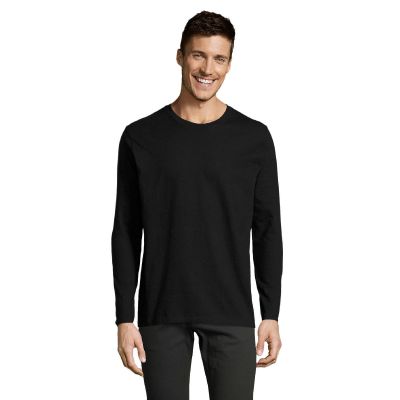
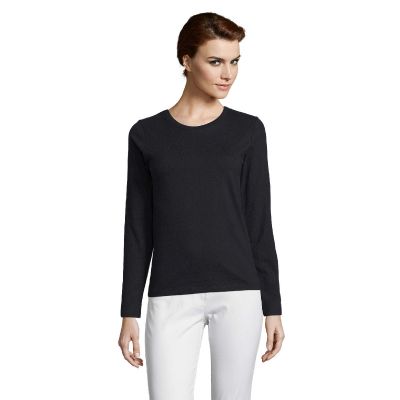
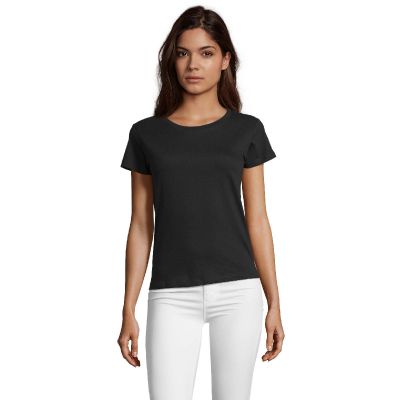
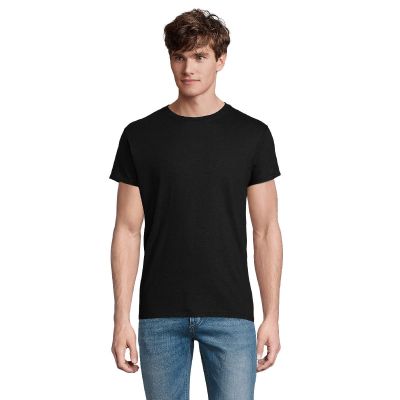
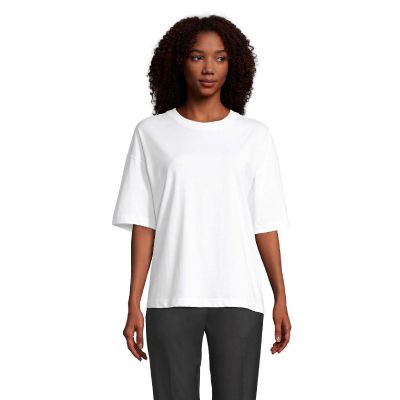
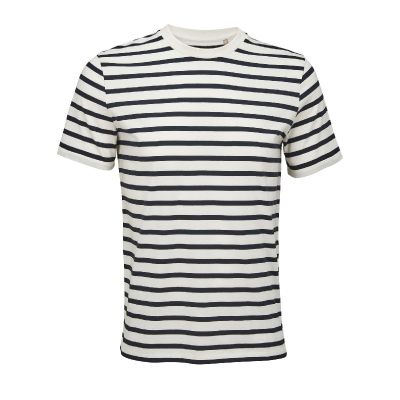
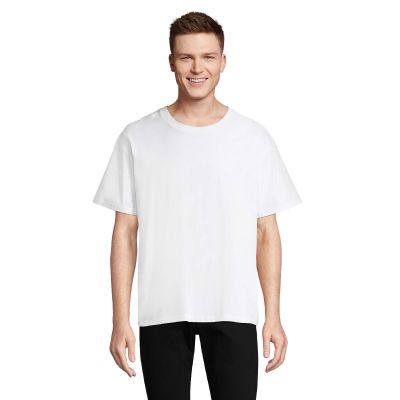
As with many garments, there are four main types of fit. Regular is the classic and most versatile option; fitted and semi-fitted styles offer an interesting balance between comfort and silhouette and work well for both personal and sports use; oversized styles have a loose fit and are extremely comfortable, making them ideal for streetwear. Other details mainly concern specific parts of the T shirt. A 1x1, 2x1 or 2x2 ribbed collar improves stretch and comfort, while crew necks and V-necks are the main alternatives. Crew necks are more common and versatile, while V-necks provide a more elegant, fashion-oriented solution. Sleeves can be short, long or raglan. Raglan sleeves provide greater freedom of movement and are often associated with technical or sports ranges. To improve durability and resistance to washing, necks and sleeves often include neck tape and double stitching. Some models also feature a removable label, which can be torn out if it causes discomfort. Dropped shoulders are instead a typical detail of oversized models.
Print methods
Customising the T shirts you have chosen means making them unique and easy to recognise, both for those who see them and those who wear them. The availability of print methods varies according to the product material and the customisable surface. The characteristics of the logo and your budget also affect the choice of the most suitable solution. Screen printing and transfer printing, for example, are available on a wide range of products, but they are very different methods. Screen printing is versatile, economical and creates a pleasant raised feel, but it cannot use more than four colours; transfer printing can use up to eight solid colours, reproduces high-quality graphics and is highly resistant to washing and wear. It could, however, be damaged by ironing. If you need full-colour printing, you can instead choose digital transfer, when available, which can deliver photographic-quality results with no limit on gradients and colours. Two methods particularly suited to this product are embroidery and DTF printing on fabric. Embroidery is precise, durable and gives a three-dimensional effect; when a full-colour version is not available, it can use up to twelve solid colours. Full-colour output is always provided by DTF (direct to film) printing. It is, however, advisable not to iron it because it could be damaged. One of the most specific methods is sublimation, which can only be applied to polyester products or surfaces that have been suitably treated. It allows full-colour images and photos to be printed while providing resistance to scratches and washing.
Gift ideas and usage suggestions
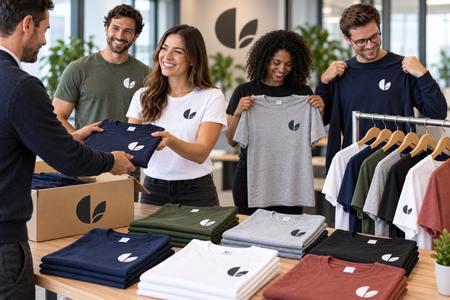
Clothing is part of everyday life and everyone, adults and children alike, wears T shirts. This is exactly why printed T shirts are so popular: once worn, they help make the brand more visible and easier to recognise. Any company, large or small, can distribute them to employees, either as a gift or as a uniform to wear at work. Construction companies, gyms, bars and restaurants can give employees a practical uniform suited to everyday tasks, while also helping customers identify staff immediately. Agencies, professional firms and businesses can instead offer a comfortable, informal alternative for people who work every day in shops and offices. One of the most common uses of printed T shirts, however, is as a promotional product to give to visitors at events, trade fairs and conferences. Products of this kind, especially when combined with Personalised Water bottles & Sport bottles and Printed Sweatshirts, allow companies to reach all kinds of audiences and can also create a sense of belonging. This is why printed T shirts have also become very popular within schools, universities and associations.
If you need further information or a practical checklist to help you choose your printed T shirts, download this document.
Printed T shirts - FREQUENT QUESTIONS
Yes, you can; this option is almost always available. Once you have selected the T shirt, simply start the purchasing process. At that point, depending on availability, you can select the colours you prefer and the corresponding sizes for each one.
The choice mainly depends on how the T shirts will be used. Cotton is soft and versatile and is suitable for merchandising, events and staff clothing. Technical fabrics in polyester or recycled polyester are instead recommended for sport and physical activity. Before purchasing, you can check composition and fabric weight on the relevant product pages.
For sport, printed T shirts should be lightweight, breathable and quick-drying. Garment construction is also important: raglan sleeves support freedom of movement, while a crew neck with neck tape provides a more comfortable finish and reduces rubbing. Among the different materials, standard and recycled polyester are some of the most suitable for sports activities, while blends with elastane and viscose are also good options.
It mainly depends on the type of activity and the people who will wear them. Regular-fit models are probably the most practical for most staff and work groups. Oversized models can work as a uniform for fashion and clothing stores, while fitted models suit dynamic settings. For a complete company supply that is consistent with the activity, it is also important to check available sizes and colours.
Short-sleeve T shirts are versatile and suitable both for distribution at trade fairs and events and for everyday use indoors and outdoors. Long-sleeve T shirts are more suitable for mid-seasons and cooler environments. The catalogue includes several models in both types; before ordering, also consider size, fit and colour carefully.
Much depends on the model selected. The positions usually available are the chest, front, back and one or both sleeves. On each product page you can find the print areas, dimensions and compatible techniques.
The best technique depends on the type of fabric, the characteristics of your logo and the result you want to achieve. Embroidery is particularly suitable for smaller logos and provides an elegant, refined and durable result. Transfer printing, DTF printing on fabric and digital transfer, when available, are instead suitable for complex, colourful graphics. Before purchasing, always check the cost, print area and techniques available for the specific product.
It is best to choose models with a good value for money and a wide range of colours and sizes. Depending on your budget and the characteristics of the logo, consider screen printing, which is particularly cost-effective for high quantities. For sports events, breathable technical T shirts are preferable, while regular-fit models are suitable for distribution at trade fairs and conferences.
Yes, the catalogue includes many unisex models. To find them, go to Printed T shirts men & unisex, or look for the word “unisex” on the product page. T shirts of this kind are particularly practical for staff, associations, events and large groups because the same model can be used for everyone. Before purchasing, also consider fit, sizes and colours.
Yes. This option is available for most printed T shirts and is useful for checking fit, colour and fabric in person. To proceed, open the product page you want, click the “BUY SAMPLE” button and complete the order.