
Choosing guide for Personalised Picnic baskets
Personalised Picnic baskets come in a range of models, materials and sizes, with features suited to different needs. They can be used privately or as part of company activities and initiatives, across many settings. Adding a logo or artwork makes each one distinctive and connects it with the brand or event for which it was chosen.
Models and accessories
The main differences between picnic baskets are their structure and included accessories. Some come with tableware and utensils; others are intended to carry everything you need and are supplied without additional accessories.
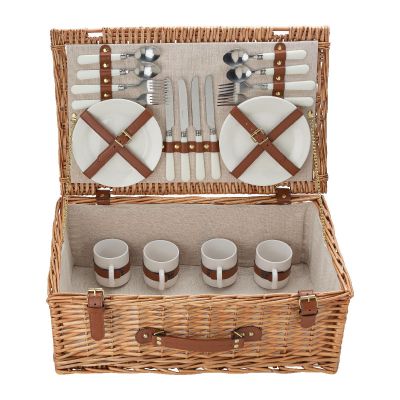
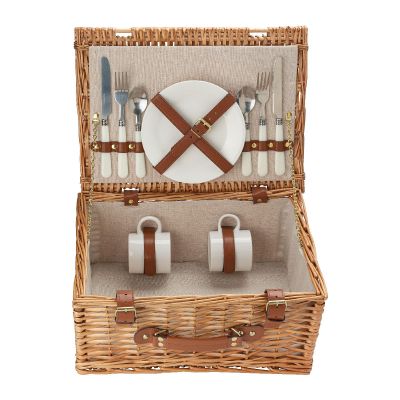
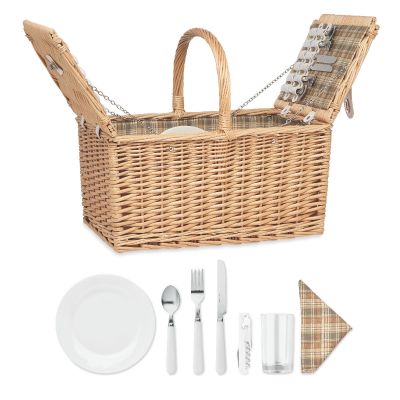
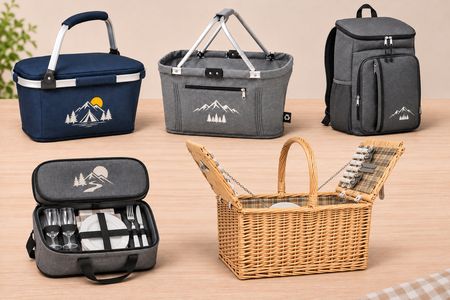
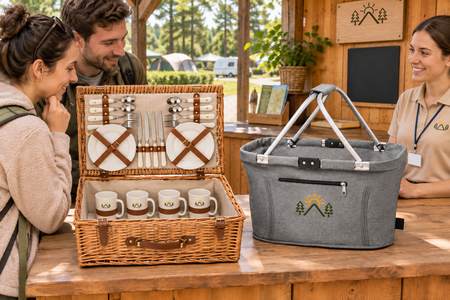
- Traditional baskets: rigid wicker baskets with carrying handles. Models for two or four people may include plates, cutlery, mugs, glasses and napkins. They are approximately 40–55 cm wide.
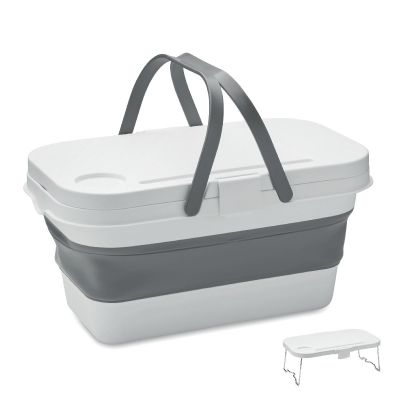
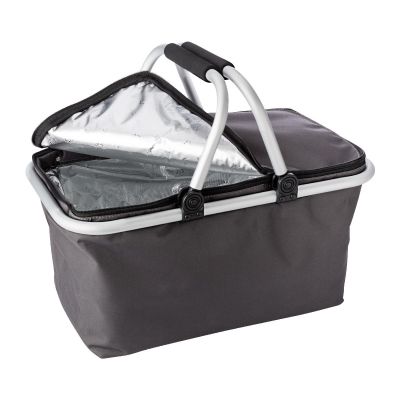
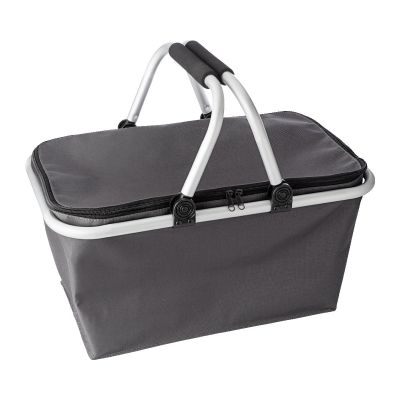
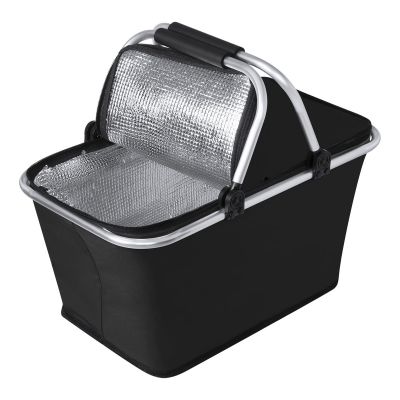
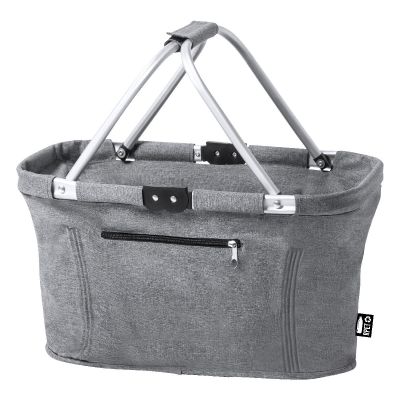
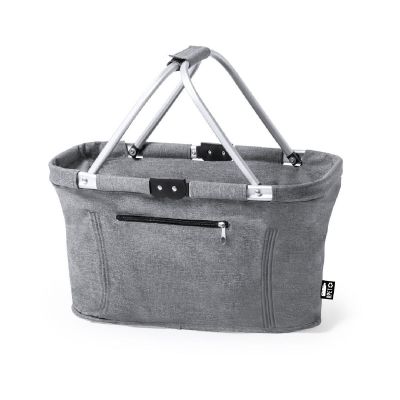
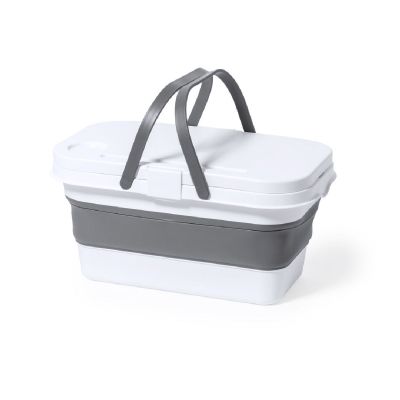
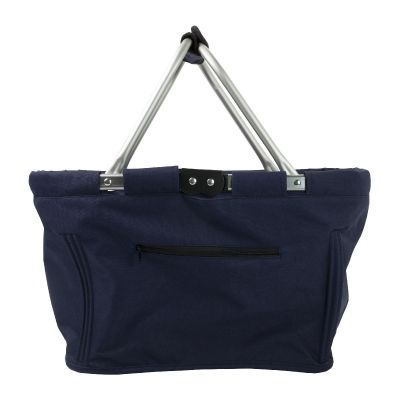
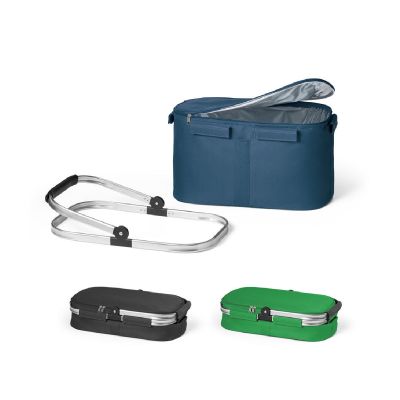
- Insulated and foldable baskets: insulated versions help maintain food temperature, while foldable ones take up less storage space. They are generally 45–48 cm wide and have capacities of up to 25 litres. Their handles, frames and structure differ from traditional baskets.
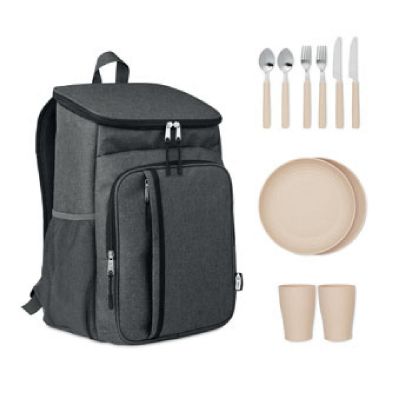
- Backpacks: easy to carry over the shoulders, with accessories for two people, including cutlery and mugs. Their dimensions are approximately 44 × 27 × 19 cm.
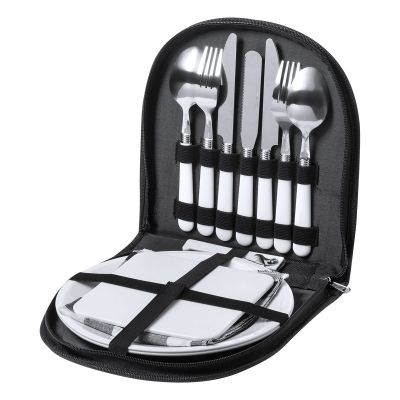
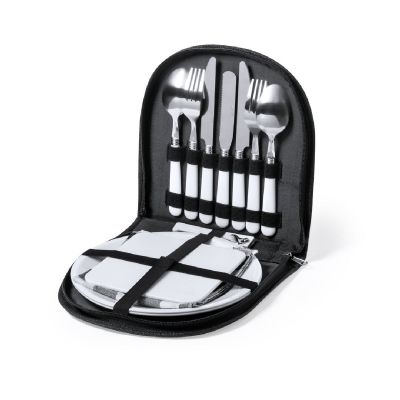
- Picnic sets: compact zipped cases containing tableware and cutlery; some also include napkins and a chopping board. They measure approximately 25 × 25 × 5 cm and are usually designed for two people.
Materials
The weight, structure and practicality of picnic baskets largely depend on their materials, which vary between products. Polyester is widely used for the basket body: it is lightweight, wear-resistant and particularly suitable for soft and foldable models. It is available in conventional form and as RPET, an alternative made from recycled PET plastic. Wicker is another common material, especially in traditional baskets; it provides a rigid structure and a natural, handcrafted look. Other materials are used for handles, frames and linings. Lightweight, durable aluminium is mainly used to support foldable baskets; soft, flexible EVA makes handles more comfortable, while ABS is a rigid, robust plastic used primarily for handles.
Where to use picnic baskets
Personalised picnic baskets are practical, versatile products designed primarily to carry food, drinks and everything needed for a meal outdoors. Some flexible models offer a capacity similar to products in the Personalised Tote bags category and can also serve as shopping bags, although their main uses are elsewhere. In parks and gardens, they make it easy to organise outdoor lunches and snacks with colleagues or friends. For day trips and days at the beach or in the mountains, they help preserve food for longer, particularly when the model has an insulated lining. Traditional baskets are also well suited to tastings and regional meals, where they can be used to present and serve food and drink, especially alongside Personalised Chopping boards and Personalised Cheese sets.
Printing methods
Once you have chosen a model, you can add a logo or artwork to associate it with a company, brand or event. The right printing method depends on the material, the design and the available print area. One of the most common techniques for personalised picnic baskets is transfer printing, which produces durable, high-quality results and also suits larger items, although it can reproduce no more than eight solid colours. For complex images with intricate details and gradients, digital transfer is more suitable. Screen printing and pad printing are more versatile, cost-effective alternatives for simple logos with just a few colours.
Gift ideas and possible uses
Picnics have a long history that is quite different from what we might imagine, but conviviality and sharing have always been at their heart. The tradition remains popular today, both privately and commercially. In tourism, hotels, agritourism businesses and campsites can provide their guests with picnic baskets and Personalised Placemats, giving them what they need for a picnic in nature or near the accommodation. Wineries and farms can take a similar approach for outdoor tastings or fill the baskets with local produce, turning them into gift packages for customers and retailers. Companies can give personalised picnic baskets to staff and partners, particularly for celebrations and special occasions. Supermarkets and food shops can offer them as loyalty rewards or in promotional campaigns. This distinctive product has a high perceived value and is often appreciated by recipients, who can use it for a variety of leisure and outdoor activities.
If you would like more detail or a practical checklist to help you choose the right personalised picnic baskets for your needs, download this guide.
Personalised Picnic baskets - FREQUENT QUESTIONS
It depends on how you plan to use it. If the picnic is part of an organised experience, such as a lunch prepared by an agritourism business, an equipped traditional basket can also make an attractive presentation. For longer trips or activities where guests carry their own food, consider an insulated basket. Foldable models are practical when many items need to be stored and moved, for example at an event. Some baskets are both insulated and foldable.
A backpack is suitable when walking and keeping your hands free matters; a set in a case is better when the main requirement is to keep tableware and cutlery in a small space, for example as part of holiday accommodation equipment. Before choosing, check whether you also need an insulated container for food.
It depends on the intended use. Choose wicker when presentation and a rigid structure matter: a winery can use one to package a selection of gift products. Polyester is preferable when low weight, frequent transport and easy storage are priorities, as with supermarket promotions. If recycled materials are important, RPET polyester models are also available.
Choose according to the intended use. A hotel organising picnics for couples can provide consistent equipment with an equipped two-person basket. An agritourism business offering family experiences can consider four-person wicker models. For outdoor walks with prepared food, an insulated version may be useful, while wineries and food producers can select rigid baskets to fill with their own products.
When baskets are handed out in large quantities, foldable models take up less storage space and can later be reused for shopping. For a summer loyalty reward, an insulated basket offers an additional benefit when carrying food and drinks. If the gift is for a small number of guests or customers, an equipped set may make more sense. Always check your budget and the space available for your logo.
Start with what you need to carry, not just the external dimensions. For a picnic for two or a gift for a couple, choose a model with two place settings; for families or small groups, consider four. For baskets without tableware, compare their capacity in litres, such as 16 or 25 L. If you will distribute them at a company event, also check their folded size, weight and ease of carrying.
It depends on the product. On textile models, available positions may include the front, back, top, lid and front pocket. On some traditional baskets, the logo may appear on a strap, handle, either side of the handle or one of the included items. Print surfaces, dimensions and techniques vary by model: check the “Printing information” section on each product page.
Yes, in most cases you can. Open the product page, click “BUY SAMPLE” and complete your purchase. A sample lets you check the materials, dimensions and accessories before ordering a full supply of personalised picnic baskets.