


Choosing guide for Personalised Thermal bags in recycled materials
Personalised Thermal bags in recycled materials help transport different kinds of food and drink while helping to maintain their temperature on the move. They are made using recovered materials and vary in texture, features and appearance depending on the chosen model. A wide range of sizes makes them suitable for many situations, while closures and other details affect convenience and ease of use. Customisation with logos, wording and graphics can turn them into promotional items that reflect the identity of a company, event or initiative.
Materials used
Thermal bags are generally made by combining several materials: the outer layer determines durability and appearance, while the inner layers contribute to insulation. Recycled materials are particularly common in the outer covering. The most widespread is RPET, a polyester obtained from recovered PET, appreciated for its light weight and resistance to wear. Other options include recycled PU, flexible with a leather-like finish, recycled non-woven fabric, which is extremely lightweight, and recycled polypropylene (PP), used for rigid structures. Natural-origin materials include recycled cotton, soft with a recognisable weave, recycled paper, generally laminated to improve moisture resistance, and recycled denim, with its characteristic jeans appearance. The interior is more commonly lined with aluminium, which reflects heat and helps limit heat transfer, or PEVA, a flexible, easy-to-clean material. Some products also use polyethylene foam, which can improve insulation and provide light padding.
Available sizes and models
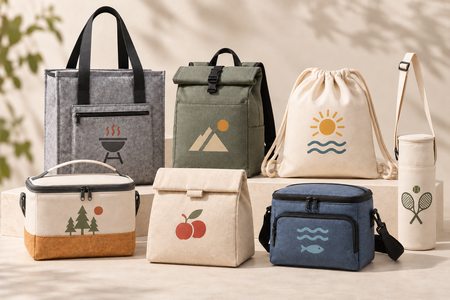
Personalised Thermal bags in recycled materials come in different sizes, mainly according to their capacity in litres. Mini versions hold up to 5 litres and suit snacks and small meals, while small bags hold no more than 10 litres and have space for a complete lunch. There are also medium and large sizes: medium bags hold 10 to 20 litres and can carry a substantial quantity of food and drinks; large bags exceed 20 litres and are suitable for shopping, picnics and days outdoors. The range also includes different models, each with its own shape and distinctive features.
- Bag: usually rectangular and often equipped with various features and closing systems. Suitable for transporting food and drinks for lunches, travel and picnics.
- Shopper: roomy and spacious, with long handles so it can also be carried on the shoulder. Particularly suitable for shopping.
- Drawstring bag: soft, flexible and generally fairly compact; takes up little space when empty.
- Backpack: distributes weight across the shoulders and leaves your hands free on walks and hikes.
- Bottle carrier: narrow and elongated, often cylindrical, designed to carry bottles and cans while helping maintain their temperature.
Closures and other details
Closures are essential to thermal bags because they protect the contents and limit exposure to the outside environment. The most common option is the zip, which is quick and practical, but hook-and-loop fastenings for immediate access and roll-top closures, in which the top edge folds over on itself, are also widely used. Drawstrings are common on soft bags and tighten the opening with a cord, while buckles and hooks secure or adjust parts of the bag. Rigid models may feature an actual lid. Other details mainly influence everyday convenience. Handles, shoulder straps and backpack straps make bags easier to carry, while foldable structures save space when empty. Pockets and compartments help organise food, drinks and small objects. Insulation depends on thermal linings and padded layers, which help reduce heat transfer. Some models also include specific accessories such as built-in cutlery, bottle openers and cup holders.
Printing techniques
Customisation is what makes your thermal bags distinctive and recognisable, but not every printing method is suitable for every product. Availability depends on the chosen material, the artwork and the available print area. The most common option is transfer printing: the design is first reproduced on a special carrier and then transferred to the fabric using heat and pressure. This produces a high-quality result resistant to washing, wear and weather. Screen printing is another option, especially cost-effective for large orders and suitable for simple logos with a few colours and clearly defined details. For more complex images, gradients and photographs, digital transfer produces full-colour prints with good definition even in fine details. Some products also allow sublimation, provided the surface is polyester or a specially treated material. This also permits full-colour printing and, when supported by the model, can cover the entire outer surface.
Gift ideas and suggestions for use
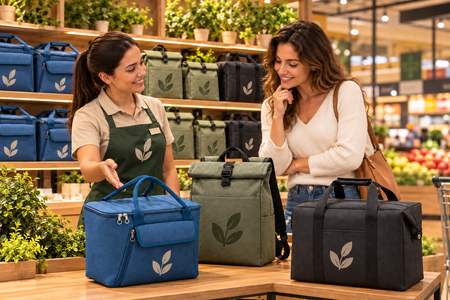
Personalised Thermal bags in recycled materials suit many promotional initiatives, particularly when you want to give something that remains useful after the event. In the food and drink sector, beverage producers can include them in tasting kits to launch new products, while supermarkets and specialist shops can offer them as loyalty programme rewards. Hotels, campsites and beach resorts can give them to guests as welcome gifts or include them in excursion packages. At sports competitions, tournaments and outdoor events, they can be part of participant kits alongside Personalised Water bottles & Sport bottles, Personalised Backpacks and Custom Snoods. They can also be handed out at trade fairs and conferences, particularly when the event focuses on sustainability or resource recovery. In these settings, such a product helps businesses promote their brand while providing customers with a genuinely useful gift.
If you need further information or a practical checklist to help you choose the most suitable Personalised Thermal bags in recycled materials, download this document.
Personalised Thermal bags in recycled materials - FREQUENT QUESTIONS
Choose according to the setting and intended use. For large-scale distribution at trade fairs, RPET is practical because of its resistance and variety of models. Recycled cotton has a simple, natural appearance and works well for hotel and agritourism welcome kits, while recycled denim is an interesting choice for festival and fashion-brand merchandise. Recycled paper, often laminated, enhances small promotional gifts. Recycled PU, with its leather-like finish, suits more refined gifts for customers and partners.
Capacity depends on what you need to carry. Up to 5 litres may be enough for a promotional kit containing snacks and a drink; for staff lunches, consider 5–10-litre models. Bags holding 10–20 litres suit tasting kits with several products, while bags over 20 litres can be used for picnics organised by hotels and resorts. Before ordering, also check dimensions, closure and the other product features.
It depends on how it will be used. For a lunch-break gift, choose a compact thermal bag, preferably with a handle and pockets. A thermal shopper is better suited to supermarket and food-shop loyalty campaigns because customers can reuse it for shopping. A thermal backpack is the most practical option for hikes, sports centres and activities on the move, especially when people need to walk for a long time with their hands free.
Thermal drawstring bags are ideal when light weight and practicality matter, for example in kits handed out at races, summer camps and guided hikes. Thermal bottle carriers are better suited to promotions centred on a single drink, such as winery tastings, tourist visits or summer giveaways from beverage companies. Before choosing, check the container dimensions, closures and other included features.
For campsites and beaches, favour bags with zips, an easy-to-clean inner lining, a reinforced base and an adjustable shoulder strap. A roll-top closure can be helpful when the load varies frequently. At sports tournaments, models with two compartments and pockets are practical for separating drinks, food and small items. Check the composition carefully if the bag will often come into contact with sand or moisture.
For giveaways to large numbers of visitors, choose small thermal bags or lightweight RPET drawstring bags that are easy to carry. For supermarket loyalty schemes, shopper or foldable models that customers can reuse for everyday shopping are more appealing. For important clients or conference speakers, consider structured bags in recycled felt or recycled PU. For campaigns with particularly elaborate graphics, look at models that allow all-over customisation.
It depends on the model. The most common positions are the front, back, closure, right side and left side. Some products also allow personalisation on lids, pockets and, depending on the technique, the entire surface. Before buying, always check the printing techniques and available print areas in the relevant product description.
Yes, this feature is available for most Personalised Thermal bags in recycled materials and lets you examine them in person before placing a full order. Simply go to the product page, click “BUY SAMPLE” and complete your purchase.