


Choosing guide for Promotional Teddy bears
Soft, colourful and often linked to childhood memories, Promotional Teddy bears are among the gifts people become most attached to. They can accompany children during play, serve as a memento of a visit or become an event mascot. These friendly plush animals come in many models, materials and options for different age groups, making them suitable for a variety of occasions and needs. Adding a logo, symbol or graphic makes them recognisable and connects them to companies, initiatives and associations. Customisation creates a positive bond with the brand, strengthening its image and helping it remain visible over time.
Available models
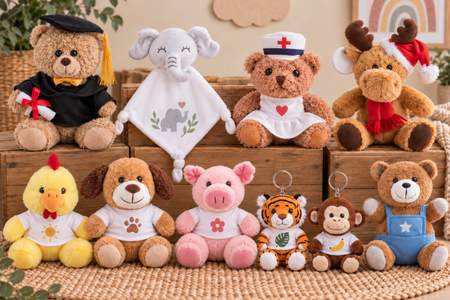
Teddy bears may be the best known, but the Promotional Teddy bears category also includes many other plush animals: pets and farm animals such as dogs, cows, pigs and rabbits, as well as exotic animals such as lions, tigers, elephants and giraffes. Pandas and monkeys are also popular, along with more unusual choices such as reindeer and flamingos. Beyond the animal portrayed, shapes, sizes and accessories vary, offering models with different features.
Classic plush toys: they depict animals in their more traditional form, without clothes, and come in different sizes and colours.
Plush toys with T-shirts, sweatshirts and hoods: they wear little decorative garments that give each toy a distinctive appearance.
Plush keyrings: compact versions with a ring or attachment for keys, bags and backpacks. Their small size makes them easy to carry.
Themed plush toys: they feature outfits and accessories associated with holidays, professions and special occasions. Some also come with a soft blanket.
Comforters (doudous): flat, soft designs, often with easy-to-grasp sections, created for the comfort and reassurance of very young children.
Materials and composition
The material has the greatest influence on a plush toy’s softness, durability and ability to retain its shape. The most widely used is polyester, a lightweight, hard-wearing fibre that retains colour well and produces soft, comfortable surfaces. Some products also contain PET, a polymer in the polyester family, or RPET, its recycled version, which has characteristics similar to conventional polyester but reflects greater attention to sustainability. Polypropylene, which is lightweight and durable, is also found in several compositions, while PVC and polystyrene are far less common and are generally used to make the product more rigid. Accessories also vary in material: T-shirts and sweatshirts may be made of polyester, RPET or cotton, while fleece scarves, hats and blankets add practical or decorative touches. Some models also feature paper or cardboard tags and metal rings for keyrings.
Recommended ages
Choosing a personalised plush toy depends on the recipient, although these little toys are generally appreciated regardless of gender or age. For newborns and very young children, there are comforters (doudous) with soft shapes and easy-to-grasp sections; however, you must check that the individual item is explicitly suitable for this age group. Children may prefer classic plush toys, models wearing T-shirts or sweatshirts, or their favourite animals. Plush keyrings can appeal to both teenagers and adults, adding a playful decorative touch to keys, bags and backpacks. Themed plush toys can also interest older recipients, particularly when they commemorate an event or are given as symbolic gifts or collectables. This does not mean that every model is suitable for every age. When the recipient is a young child, it is particularly important to check the manufacturer’s age guidance and read labels, instructions and any safety warnings carefully, especially where accessories or detachable parts are involved.
Customisation
Printing techniques make these plush toys recognisable and link them to a business, an event or an association. The most suitable method depends on several factors, including the material, available print area and the characteristics of the logo. The most common is transfer printing, which applies a design to fabric using heat and pressure for a clear, well-defined result. Modern digital techniques include sublimation, which offers full-colour printing with good resistance to scratches and washing, and digital transfer, also suitable for detailed, colourful logos. Bear in mind that sublimation requires polyester or specially treated surfaces, while digital transfer works particularly well on flat, even areas. Embroidery, including multicolour embroidery, is a traditional technique that uses coloured threads to reproduce a logo, producing a slightly raised, durable decoration with a refined textile look. Screen printing and pad printing can be more economical solutions, especially for simple logos with few solid colours. The former is particularly cost-effective for larger quantities, while the latter can also be used on very small areas.
Gift ideas and ways to use them
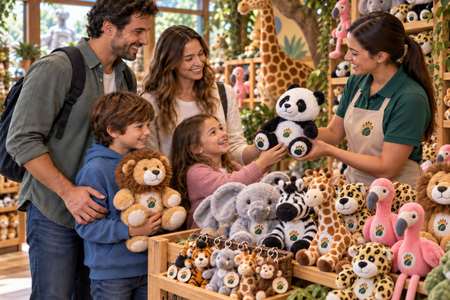
Promotional Teddy bears convey happiness, warmth and positivity, helping create an emotional connection with the recipient and the symbol or event they represent. This makes them suitable for children’s hospitals, foundations and charities, where they may be used in fundraising campaigns, solidarity initiatives and activities for children. One example is the Teddy Bear Toss, a charity initiative that originated in American sports and later spread to Europe, where plush toys are collected for children. At theme parks, zoos and aquariums, they can represent the animals visitors love most, becoming souvenirs sold in gift shops or small prizes distributed during activities. At hotels, holiday villages and family resorts, they may be offered as welcome gifts or combined with Promotional Puzzles and Custom branded Traditional games for entertainment activities. Schools, play centres and summer camps can also use them in workshops, themed days and educational projects, choosing age-appropriate models. For companies and shops, these plush toys can become merchandise, customer giveaways or rewards linked to promotions and loyalty programmes. Their versatility also makes them suitable for sport, where animals often form part of a club’s emblem and history. Recreating them as plush toys, perhaps with team symbols and colours on a T-shirt, can strengthen fans’ sense of belonging and introduce younger children to their team.
If you would like more detailed information or a practical checklist to help you choose the most suitable promotional teddy bears for your needs, download this document.
Promotional Teddy bears - FREQUENT QUESTIONS
The best approach is to choose a plush toy representing an animal already featured in the logo or one that reflects the brand’s values and identity. Models with a T-shirt or sweatshirt also let you add company symbols and colours, making the mascot even more recognisable. Remember, however, that most available plush toys have predefined shapes: you can customise them with logos and graphics, but you cannot change their silhouette.
It depends on the context in which they will be used and how prominently you want to display your logo. Unclothed plush toys look more natural and are the better choice if resembling the actual animal is your priority. Models with a T-shirt, sweatshirt or hood are more suitable when you want greater logo visibility, using the clothing as a printable surface.
Choose according to the experience and place you want to represent. In zoos and wildlife parks, for example, you can choose animals found at the venue; for tourist destinations, museums and attractions, animals connected to the local area or its history may be appropriate. Where there is no specific animal to represent, teddy bears are a versatile, instantly recognisable choice that suits many different settings.
It depends on the intended use and the target audience. Classic plush toys are particularly popular with children and make suitable gifts, souvenirs and mascots. A plush keyring is more versatile: its attachment allows it to be fixed to keys, bags and backpacks, making it a practical choice for teenagers and adults who want to carry it every day.
Start with the intended use. Classic plush toys, including models with clothes and accessories, come in small sizes (12–15 cm) for easy-to-distribute giveaways, medium sizes (16–20 cm) for corporate gifts and souvenirs, and large sizes (21–32 cm) for display mascots or special prizes. Keyrings (approximately 7.5–10 cm) are easy to carry, while comforters have their own shapes and dimensions. Check the material, measurements and available print area before choosing.
Consider small or medium-small classic plush toys, plush keyrings or models with a printable T-shirt. The latter are especially useful if you want to highlight a company logo or design. These options are generally compact, easy to hand out and attractive to different age groups. If young children will attend the event, always check the stated age suitability of each item.
For charities, fundraising projects and activities for children, choose classic, soft plush toys representing widely loved animals such as bears, tigers and lions. Models with T-shirts and plush keyrings are also useful for fundraising merchandise because they make the organisation recognisable. If the toys are destined for hospitals or children’s wards, check the facility’s rules and any hygiene and safety requirements in advance.
Yes, a sample can be ordered for most models in the Promotional Teddy bears category. Open the product page, click “BUY SAMPLE” and complete your purchase. A sample is particularly useful before placing a large order because it lets you examine the plush toy’s softness, colour and dimensions in person.
It depends on the individual product. Common positions include the front and back of T-shirts and sweatshirts, the tummy, or a label or tag. Some models also allow personalisation on scarves, ears, antlers, hoods, blankets or other accessories. Each product has specific printable areas, which you can check in the “Printing info” section of its product page.
The best choice depends on the material, the available print position and the characteristics of the logo. Embroidery gives a durable, slightly raised textile effect but needs a suitable surface and may be less effective for very fine details. Transfer and digital printing are better suited to complex, colourful logos, while screen and pad printing mainly suit simple graphics with few colours.