
Choosing guide for Promotional Puzzles
When thinking of a game that can entertain adults and children alike, promotional puzzles are certainly one of the first examples that comes to mind. Joining one piece after another, whether there are many or only a few, is an evergreen pastime. Blocks and tiles also come in a wide range of shapes and materials, allowing promotional puzzles to take on a playful, educational and even decorative role depending on the context. On the other hand, limiting their use to assembly alone would be a mistake, given the great potential of such an engaging and instantly recognisable product. The countless customisation possibilities are another feature that strengthens their versatility. Choosing the right printing technique does not simply turn promotional puzzles into unique pieces; it also helps define their identity and meaning.
Number of pieces and packaging
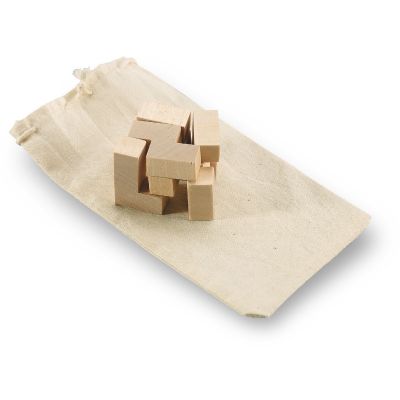
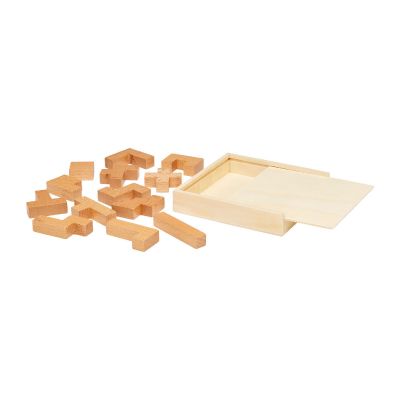
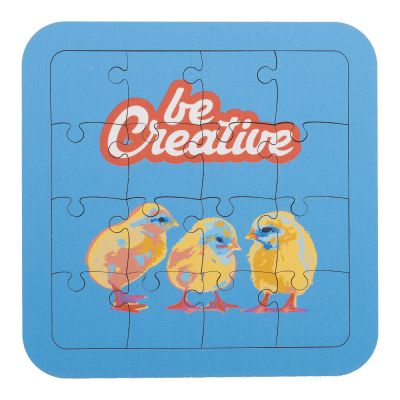
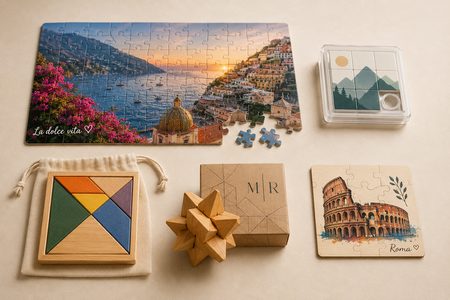
What defines promotional puzzles more than anything else is precisely their pieces and their number. Given their hybrid nature, halfway between a game and a brain teaser, the number of pieces varies greatly and depends on what is being assembled. In some cases there may be 40 or 80 loose pieces, while simpler compositions with 12, 16 or 24 pieces are also available. In some cases, especially with games or brain teasers, the total number of pieces can even fall below 10. In these cases, however, the interlocking pieces can offer multiple solutions. Packaging, by contrast, tends to be simpler, as products are generally supplied in boxes or drawstring bags.
Available materials
The material used for the pieces in promotional puzzles has a major impact on the final result, both visually and to the touch, and there is no shortage of alternatives. The most widely used material is wood, available in natural, coloured, bark and plywood versions. Other materials with a greener profile include bamboo, one of the most eco-friendly materials available, and recycled paper, both standard and kraft, which is darker and similar to cardboard. Plastic-based compounds are also available. EVA (Ethylene Vinyl Acetate) produces a lightweight, impact-resistant and flexible product, while recycled ABS (Acrylonitrile Butadiene Styrene) is also an eco-conscious alternative thanks to the recovery and reuse of existing plastics. The differences in materials can also be seen in the packaging of promotional puzzles. Bags, for example, may be made of non-woven fabric, cotton or polyester, while boxes are generally made of paper or recycled cardboard.
Formats and other details
The available shapes and models make promotional puzzles one of the product groups with the widest variety in the HiGift catalogue. Summarising them all is almost impossible, but they can be divided into four main types.
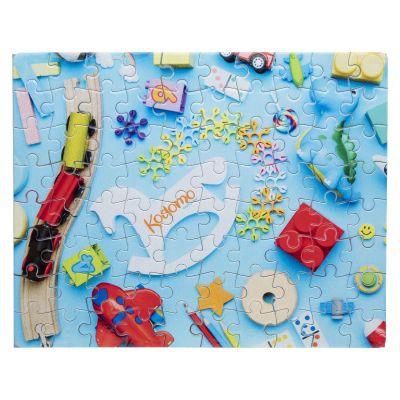
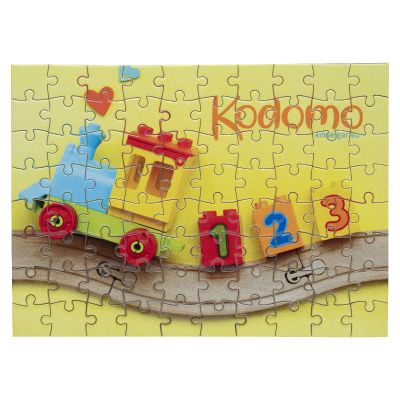
- Classic puzzles: traditional puzzles in which the different pieces, once assembled, form an image of our choice or one already featured on the product.
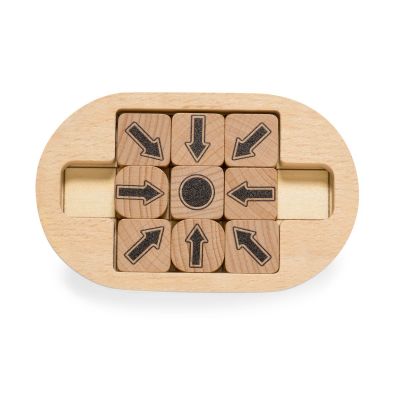
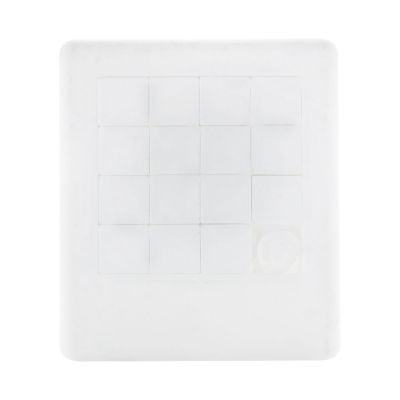
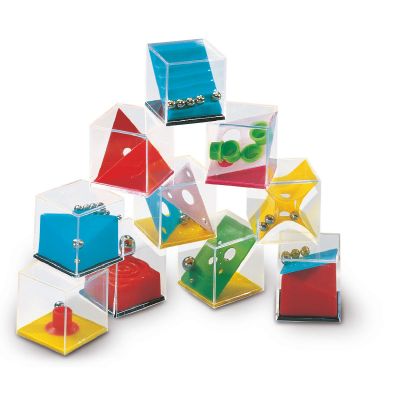
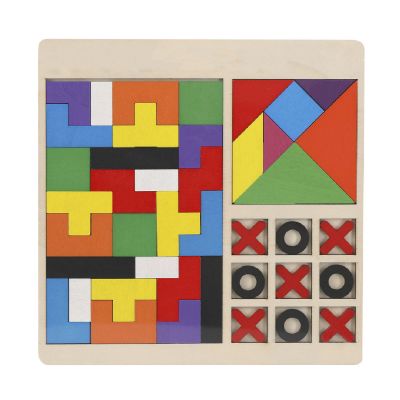
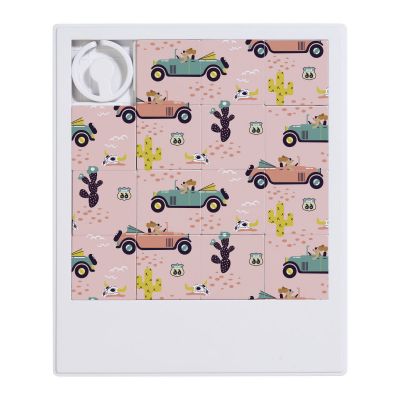
- Game puzzles: playful puzzles that allow users both to assemble images and to play. These include rotating puzzles, colouring puzzles and some sets that combine compositions with other games, such as noughts and crosses.
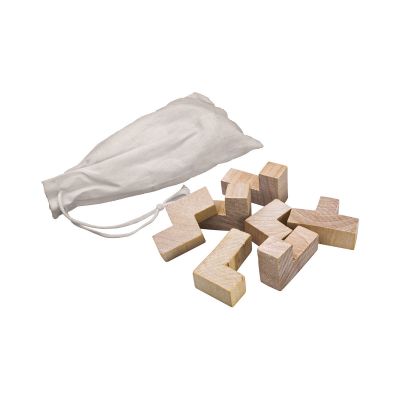
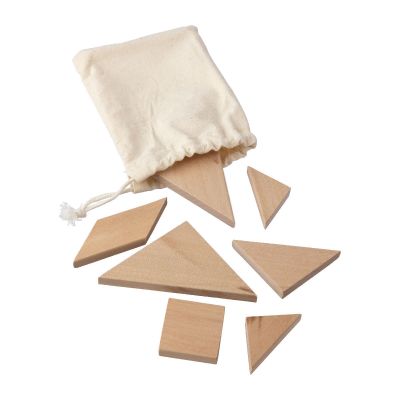
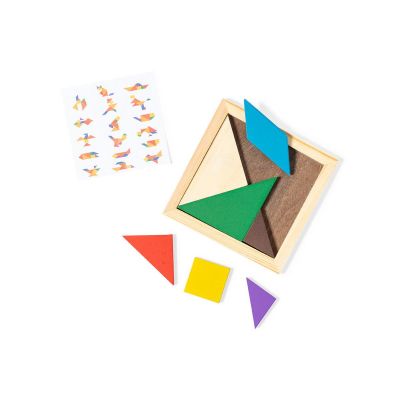
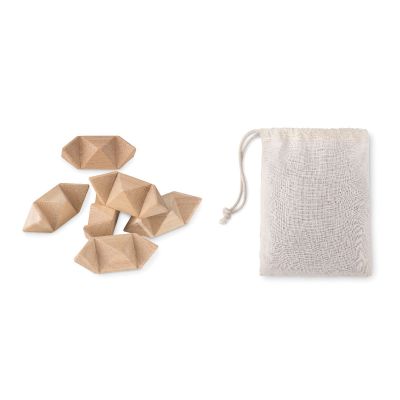
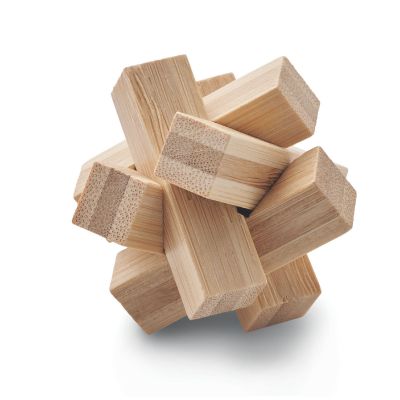
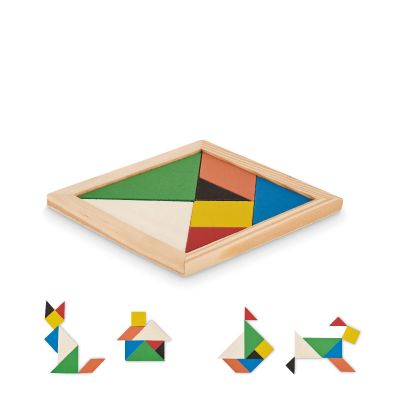
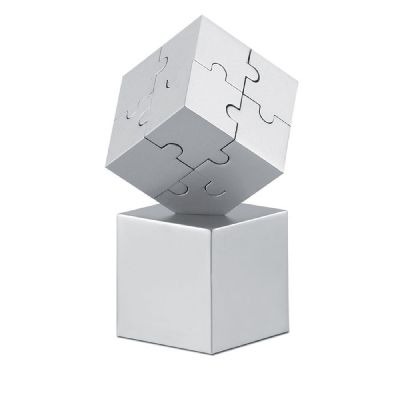
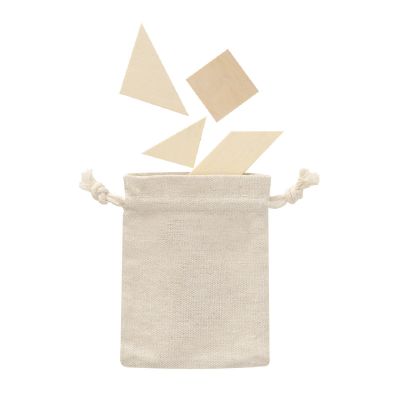
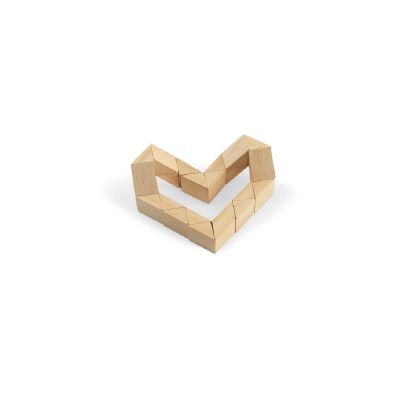
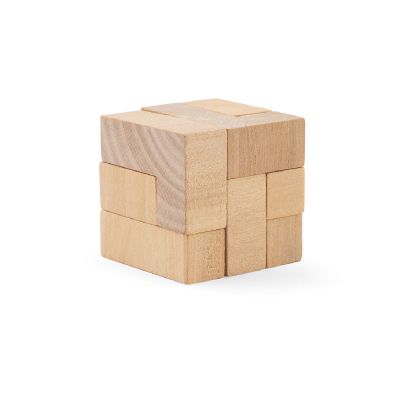
- Brain-teaser puzzles: distinctive products generally made up of blocks or pieces whose interlocking structure can create either a single shape, such as a heart, or several alternative solutions. The pieces may be geometric, such as squares and triangles, or irregular.
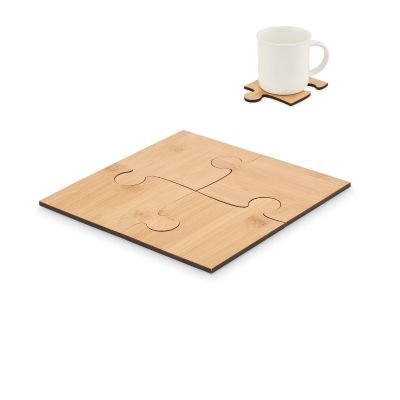
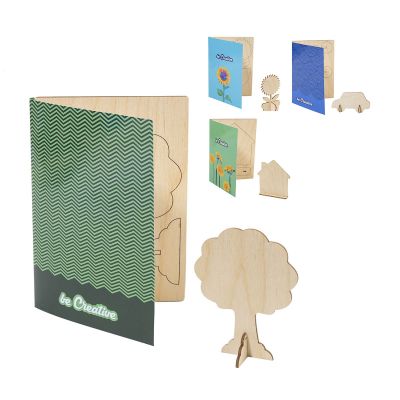
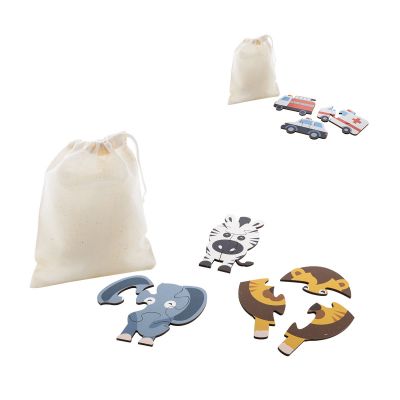
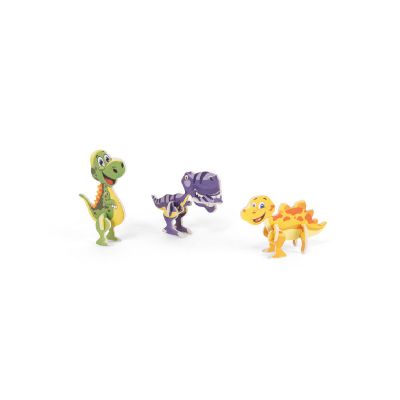
- Object-shaped puzzles: puzzles whose pieces combine to create specific objects. Some are 3D, others become coasters or postcards, while others form cars, dinosaurs and animals.
The most suitable printing techniques
There are many printing options for promotional puzzles, especially because each product has very specific characteristics. Once you know what you want from the print, however, it becomes easier to identify the customisation that suits you. If you need full-colour printing, you can choose from sublimation, digital printing and digital transfer, while the best options for an economical and durable result are screen printing and pad printing. Two other possible methods, both elegant and high quality, are transfer and engraving, with engraving also able to add depth to the object. If you are looking for a distinctive and eco-conscious technique, you can choose UV LED printing, which dries the ink without solvent evaporation.
Gift ideas and possible uses
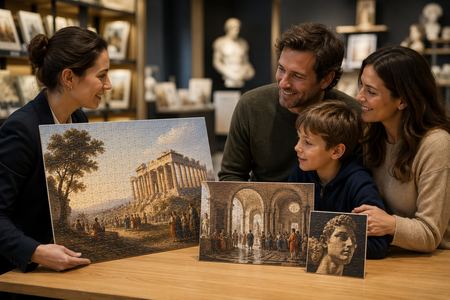
Promotional puzzles are first and foremost a source of fun, but for children they can also be an ideal way to develop learning and logical thinking. In places such as schools, nurseries and educational centres, they can be used both as games and as rewards for school activities, while stationery shops and toy shops can offer a resale product suited to families and leisure time. Their role as an enjoyable pastime also works well in accommodation facilities and holiday villages, especially when placed in shared areas and combined with Custom branded Traditional games and Custom branded Playing cards. Promotional puzzles can also make excellent themed souvenirs, particularly when purchased at the end of a visit to museums, themed attractions, zoos and aquariums. Their decorative character comes to the fore when they are used to furnish corporate spaces, trade fairs and showrooms. Whether they take the form of an elegant eco-friendly decorative object or a composition to assemble, promotional puzzles always stand out for their originality.
If you need more in-depth information or a practical checklist to help you choose the promotional puzzles that best suit your needs, download this document.
Promotional Puzzles - FREQUENT QUESTIONS
Yes, if the model includes a customisable bag. On the product page you can check this detail and see which customisation techniques are available. The options vary according to the material and the model selected.
Yes, you can. One technique that allows this is digital printing, as it can print in full colour. With this technique you can transfer high-quality images or text onto the product, with sharp details, vivid colours and even gradients.
It depends on the product and on the result you are looking for, but both can potentially be suitable. Engraving gives an elegant and precise result, made even more distinctive by the fact that every piece of wood is unique, so the outcome will always be slightly different. You could instead choose a printing method such as pad printing if you are looking for an economical technique or if the available print area is quite small, as in this case.
The most suitable products in this case are game puzzles, especially rotating or colouring versions. This way, children can have fun while also learning to distinguish shapes and colours. Another good option is 3D puzzles or models featuring cars, animals and dinosaurs, which are usually very popular with children.
Certainly. Once you have chosen the product and the printing technique that best suits your logo, simply upload the file containing it and you will soon be able to view the artwork proof for your order free of charge. If you are happy with it, approve it and production will begin; otherwise, you can request further changes.
If the purpose of the puzzle is to serve as a decorative item, it is best to prioritise compositions that can be framed or 3D products that can look like elegant and original ornaments. Unless the area is intended for games and leisure, avoid game puzzles.
Yes. A promotional puzzle works well as a corporate gift, especially when the artwork has a particular meaning for the recipient. Examples include a historic company photograph, an especially important project or an illustration connected with that industry.
Of course. Once you have chosen the product that best suits your needs, simply select the desired quantity on the product page and, where available, add it to your basket. The larger the order, the greater the saving on each individual product.
You can find the dimensions on each product page, shown in centimetres or millimetres. Check, however, whether the stated measurement refers to the assembled puzzle, the packaging or the individual piece. If you still cannot find the information you need after checking, contact our customer service team.
It depends on the individual product. In some cases you can customise the entire surface with the image you want, while in others a small margin must be left around the edges. For exact and detailed information, always check the product page or contact us.