


Guide to choosing Personalised Snacks
Personalised snacks are small sweet or savoury foods that can be handed out at events, offered to customers or included in corporate gift kits. They come in a wide range of shapes and flavours, making it possible to choose either familiar tastes or more unusual combinations, depending on the occasion. Packaging also plays an important role: it protects the contents, makes distribution easier and helps present the product. Customisation allows logos, lettering and graphics to be reproduced on the packaging, increasing brand visibility and recognition.
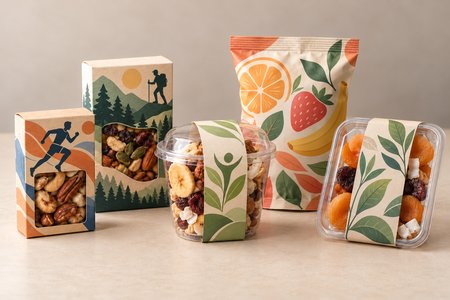
Available products and formats
A snack's format refers to its shape, regardless of the packaging it comes in. This category includes different foods, all small in size and intended to be enjoyed in bite-sized portions.
- Coffee beans, seeds and bite-sized snacks: include coffee beans, roasted seeds and fruit-based balls. They can be eaten one at a time during a break or alongside a drink.
- Nuts and dried fruit: almonds, hazelnuts and peanuts are crunchy, while figs and apricots are softer. They make a convenient snack at any time of day.
- Fruit crisps: thin, generally crunchy slices of apple, banana or coconut to nibble on while travelling or taking a break.
- Bars: small and compact, making them practical for a quick snack even when away from home.
- Pretzels and biscuits: pretzels have a distinctive twisted shape and are ideal with an aperitif; small, crumbly biscuits can be enjoyed with coffee or tea.
- Popcorn: popped corn kernels or kernels to prepare in the microwave; ideal for a film or a snack to share.
Flavours and tastes
Personalised snacks can be sweet or savoury, with combinations of ingredients and flavourings to suit different preferences. Among sweet options, chocolate is the most common, in white, milk and dark varieties, especially as a coating for nuts and small bites. Caramel gives a sweet, toasted flavour, while coffee is more intense. Cocoa adds slightly bitter notes, and cinnamon offers a warm, spicy aroma. Between these are fruit flavours such as cherry, raspberry and mixed berries, often paired with chocolate. Dried fruit and apple, banana or coconut crisps retain the characteristic taste of their main ingredient. Savoury choices are more straightforward: mainly nuts, seeds, pretzels and popcorn, with salt and, in some cases, roasting. Spiced versions, including paprika for a hotter, bolder taste, are less common. More unusual combinations include matcha, with its vegetal notes, and fresh, aromatic mint.
Packaging
Packaging protects snacks and makes them easier to carry, but it also influences their presentation and the quantity of food they can hold. Small portions are mainly packed in sachets and bags: flexible, compact formats generally made from paper or, depending on the model, recyclable or compostable materials. Popcorn bags can contain up to 100 g, whereas other sachets rarely exceed 10 g. For a more structured presentation, choose paper boxes or cardboard boxes, sometimes with a clear window to show the contents or internal compartments for several snack varieties. They come in many shapes and sizes, holding around 12–15 g in the smallest models and up to 70 g in larger ones. For eating directly from the container, cups made of paper or clear plastic and glass jars are practical options; jars are rigid, reusable and suitable for a more refined presentation. Cups hold around 45 g on average, while jars generally contain approximately 55–60 g.
Customisation
Printing techniques can reproduce logos, lettering and images on personalised snack packaging, but their suitability for each item depends on several factors. The most important are the packaging material, the characteristics of the logo and the actual printable area. Digital printing is one of the most widespread methods: it is versatile and can reproduce detailed, colourful artwork sharply. Full-colour adhesive labels are also common for customising jars, pots and small boxes. Flexographic printing uses flexible printing plates to transfer ink onto the packaging surface. It is versatile, precise and offers very fast production, but usually requires fairly high minimum order quantities.
Gift ideas and suggestions for use
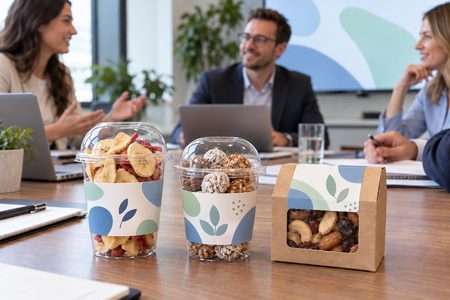
Choosing a balanced snack during the day can be a healthy habit and offers a chance to take a short break, particularly at work, while travelling or during an event. Personalised snacks combine this practical role with a promotional one, turning a small food item into a welcome gift. In hospitality, hotels and resorts can offer them in guest rooms, at reception and in conference rooms. Bars, restaurants and catering services can serve them with aperitifs and coffee, often alongside Personalised Chocolates and Personalised Biscuits. At trade fairs and conferences, single-portion sachets are easy to hand out at stands, include in welcome bags or offer during coffee breaks. In retail and e-commerce, they make small gifts to add to orders or give away at openings and promotional events. Their versatility also suits offices and corporate settings, where they can be provided during meetings and training sessions or left in break areas and shared spaces.
If you would like more detail or a practical checklist to help you choose the most suitable personalised snacks, download this document.
Personalised Snacks - FREQUENT QUESTIONS
It depends on your audience. For large-scale distribution, choose familiar flavours: apple, banana, roasted almonds or seed mixes. For important customers, dark chocolate with orange, cinnamon or matcha makes a more refined impression. Mini pretzels, spiced peanuts and salted seeds work well at corporate aperitifs; sweet, fruity portions suit conference welcome kits. Offer alternatives and always check allergens and labels.
Choose according to the intended use. Single-portion bags are practical for fairs, receptions and large distributions: they can be handed out quickly or added to kits. Boxes, including windowed or assorted options, enhance welcome packs and gifts for clients or speakers. Glass jars are better suited to carefully presented gifts for hotels, sales visits and end-of-year occasions.
At reception, choose small 4–15 g sachets that can be offered without any service. In shared spaces, opt for 15–30 g portions and alternate fruit, seeds and savoury options. In meeting rooms, stable cups or individually wrapped snacks help avoid sharing and crumbs; assorted packs are better suited to welcome kits or speakers’ tables.
Nuts, such as almonds and peanuts, are ideal for meeting breaks, corporate aperitifs and break areas: they are often salted or roasted and make a substantial, crunchy snack. Dried fruit, such as apple, banana and coconut, is better for receptions, welcome kits and sweet breaks without chocolate. At large events, offer both options to cater for different tastes, always checking ingredients and allergens.
Yes, they generally do. Some sachets indicate four months, but the guaranteed minimum is usually six months. Always check the relevant product pages carefully and, once your order arrives, the individual packs.
It depends on the individual product. Usually only the packaging can be customised and, depending on the format, the logo may appear on the front, back or across the entire surface. Some products also allow customisation of bands, labels and lids. Check the individual product page, particularly the «Printing info» section.
It varies by product. Some gift boxes start at 50 units, many boxes, cups and jars range from 100 to 250, while other packs start at 500. Sachets often have higher minimums, sometimes reaching 1,500 or 2,000 units.
Base your choice on your brand identity and logo legibility. White packs showcase colourful artwork and suit fairs and product launches; kraft packs convey a natural feel, ideal for welcome kits and business gifts. Clear packaging lets the snack itself be seen. Match the printed colours to your branding, checking the finishes and customisation options available for each item.