


Guide to choosing personalised bars
Personalised bars are handy snacks to enjoy on a break, take with you or offer as a small gift. They come in a range of formats, from classic bars to unusual shapes that can be matched to the occasion. Packaging can be simple and practical or designed to create a more refined presentation, while the choice of flavours and ingredients caters to both traditional and more adventurous tastes. Customisation also makes it possible to reproduce logos, messages and images on the packaging or, in some cases, directly on the bar, making it immediately recognisable and connected to a brand or event.
The variety of shapes and sizes
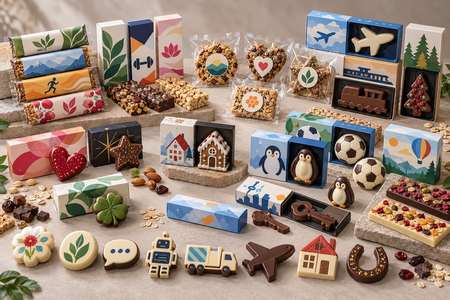
Personalised bars come in many shapes and sizes. Classic versions are usually rectangular, with weights that vary according to size: smaller ones weigh less than 30 g, medium bars can reach 50 g and larger models up to 100 g. Wafers also have a narrow, elongated shape, but are much lighter at around 10 g each. Square bars generally weigh between 35 and 75 g and are more compact. The options become even more varied with shaped bars: hearts, stars and flowers suit special occasions and small gifts, while Christmas trees and eggs are associated with seasonal celebrations. More distinctive shapes include trucks, tools, sports symbols and communication icons, which can directly reflect the business or event they are made for. Most of these bars weigh 65 g, although some 35 g versions are available.
Flavours and ingredients
Flavour is an important consideration when choosing personalised bars, as you can opt for familiar tastes that appeal to a broad audience or more unusual combinations for discerning recipients and special occasions. Sweet flavours predominate, with chocolate the most popular: milk chocolate is smooth and creamy, while white chocolate is sweeter and more delicate. Fruit flavours often include redcurrants, which add a gently tart note, and orange, with a fresh citrus taste. Diet bars are available in brownie flavours and fruity combinations such as pineapple and coconut. There are also original recipes with buckwheat, sesame and goji berries, combining cereals, seeds and fruit. Fit bars can also contain forest fruits, prunes and hazelnuts. Cereal bars generally bring together seeds and honey, whose sweetness complements the other ingredients. Topped bars are a different option: a milk-chocolate base is finished with ingredients that change both flavour and texture. These may be entirely sweet, with strawberries, sour cherries, pears or biscuits, or create a sweet-and-savoury contrast with pretzels, salted almonds or coarse salt. For those who enjoy bolder flavours, chilli versions add a spicy note to the sweetness of the chocolate.
Packaging
The two main packaging options for personalised bars are boxes and individual wrappers. They usually follow the shape and size of the product and are sometimes used together. Boxes are generally made from paper, available in three principal finishes. White paper has an even surface that helps colourful images and designs stand out, while kraft paper is recognised by its brown tone and more natural appearance. Another option is ecru paper with added grass fibres, which has a soft colour and a distinctive texture from the plant fibres. Shaped chocolate bars often also come in a preformed RPET inner tray, made from recycled PET plastic, to protect the product and keep it in position. Wrappers are food-safe coverings that directly enclose the bar. They may be transparent, showing the contents, or white, providing a suitable surface for printing.
Customisation
Printing techniques are what make personalised bars distinctive and recognisable. They allow logos and messages to appear on the packaging or on the bars themselves. Not every method is suitable for every product: availability depends on the material, the artwork and the usable print area. Digital printing is one of the most widely used options for boxes and is also available on certain bars. For direct printing on chocolate, edible inks reproduce full-colour images on the sweet's surface, including fine details and shading. Conventional digital printing works in a similar way but is applied to packaging and does not use edible inks. Other options for wrappers are flexographic printing, a quick, accurate technique commonly used for large orders, and full-colour adhesive labels, where a printed label is applied to the pack. Chocolate bars can also be customised using embossing, which presses logos, words and designs into the chocolate to create a raised-relief effect.
Gift ideas and tips for use
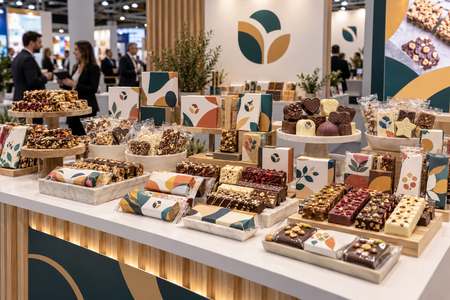
Personalised bars are easy to hand out, require no preparation and can be eaten immediately or kept for later. This makes them versatile snacks for many occasions. In sport and wellness, gyms, swimming pools and sports event organisers can add them to welcome packs alongside Personalised Cuffs and Personalised Silicone wristbands, or hand them out during and after races and training sessions. In hotels and other accommodation facilities, bars can be left in rooms as welcome gifts or offered at reception. At trade fairs and conferences, they often accompany brochures, catalogues and other Custom Sweets. Car dealerships, workshops and shops can offer them at openings and meetings with customers or suppliers, or include them with purchases during promotions and seasonal campaigns.
If you need more details or a practical checklist to help you choose the right personalised bars, download this document.
Personalised Bars - FREQUENT QUESTIONS
It depends on how they will be used. Classic formats are suitable when you need to hand out large quantities, for example at trade fairs, conferences or promotional campaigns, while shaped bars are better when you want to evoke a particular business or occasion. A transport company might choose truck-shaped bars, a workshop might choose tool shapes, and hearts, stars or Christmas symbols could work for a company celebration.
It mainly depends on the recipients. Milk chocolate and fruit combinations tend to appeal to a broad audience, making them suitable for trade fairs or corporate events. Sweet-and-savoury combinations featuring pretzels, salted almonds or coarse salt are more interesting for tastings, food events and gifts for customers who enjoy unusual flavours. Chilli varieties suit people who like stronger contrasts.
Fit bars come in several varieties and provide a good amount of protein, making them suitable for gyms and sporting activities. Topped bars focus instead on combining flavours and textures, so they are better suited to tastings and corporate gifts.
For trade fairs and events with many attendees, choose small, individually wrapped bars that are easy to hand out. Shops may prefer more refined packaging and distinctive flavours; these can be offered after a purchase, during a promotion or inside a gift box. Also consider wafers for large-scale distribution: they have a low price and a very familiar flavour.
For hotels, chocolate bars in personalised boxes are particularly suitable for leaving in rooms or offering to guests during their stay. For gyms, swimming pools and sports clubs, consider fit, protein or cereal bars to hand out during activities or include in registration packs. In both cases, it is important to consider the product's minimum shelf life, especially if distribution takes place at different times.
The choice mainly depends on the artwork you want to print. White paper is suitable for multicolour logos, images and gradients because it provides a neutral background. Brown kraft paper works well with simple graphics and dark colours, while ecru paper suits packaging with a softer, more natural look. Always check the available printing techniques and print area before ordering.
It depends on the product. Minimum quantities start at 100 pieces for shaped and printable chocolate bars and topped bars, while fit, diet and cereal bars generally start at 200 pieces. Personalised wafers may require a minimum of 5,000 pieces. You can check this information on each product page.
Yes, they generally do, but the period varies depending on the product. It usually ranges from as little as 2 months for some cereal bars to 8 months for shaped and topped bars. Always check this information on the product page and on the products once your order arrives.